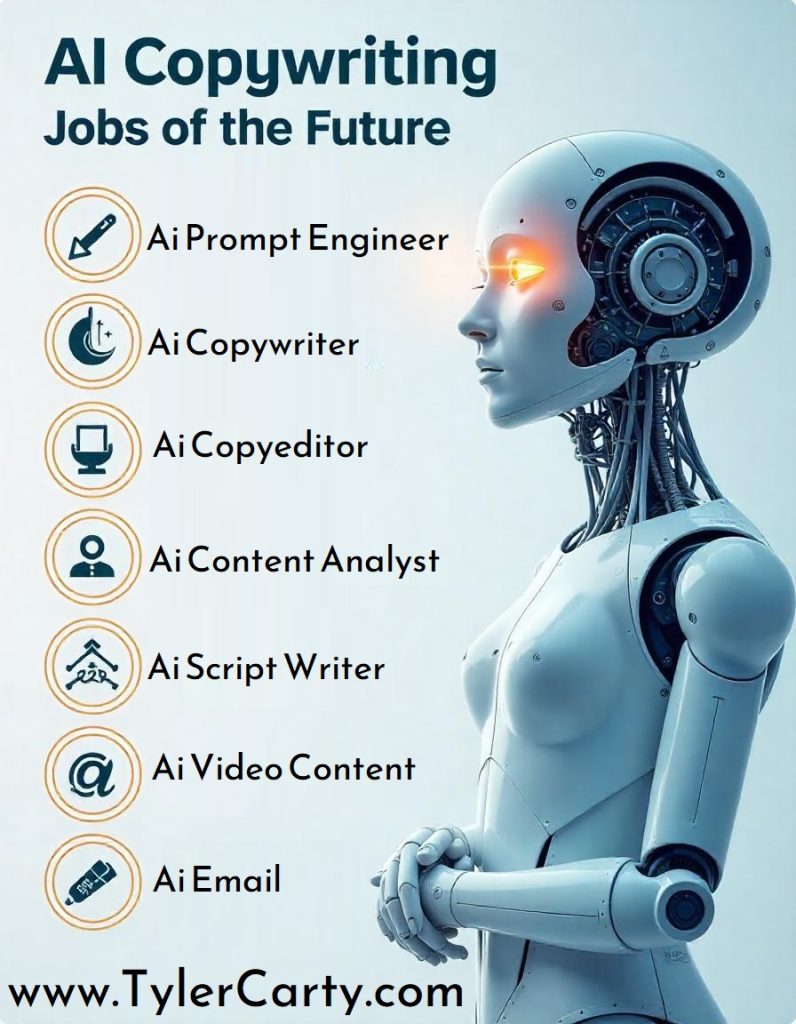
Artificial Intelligence (AI) has revolutionized the copywriting industry, offering new tools and techniques to create compelling content efficiently. AI copywriting utilizes machine learning algorithms to generate human-like text based on input prompts and data. This technology has transformed how marketers, content creators, and businesses approach content creation, enabling them to produce high-quality copy at scale.
AI copywriting tools analyze vast amounts of data to understand language patterns, tone, and context, allowing them to generate content that resonates with target audiences. These tools can assist in various aspects of copywriting, from generating ideas and headlines to crafting full-length articles and social media posts. While AI copywriting has made significant strides, it’s important to note that human oversight and editing are still crucial to ensure the content aligns with brand voice and meets specific marketing objectives.
For beginners entering the field of AI copywriting, understanding the technology’s capabilities and limitations is essential. AI tools can significantly enhance productivity and creativity, but they should be viewed as assistants rather than replacements for human writers. As the technology continues to evolve, those who can effectively leverage AI copywriting tools while maintaining a human touch will be well-positioned in the rapidly growing content creation industry.
Here’s a list of the top 10 AI jargon related to AI copywriting, ordered from most to least used:
Natural Language Processing (NLP) NLP is the foundation of AI copywriting, enabling machines to understand and generate human-like text. It’s crucial for creating coherent and contextually appropriate content.
Machine Learning Machine learning algorithms power AI copywriting tools, allowing them to improve their output based on data and user feedback. This technology is key to generating increasingly accurate and relevant content.
Content Generation AI copywriting tools excel at rapidly producing various types of content, from social media posts to long-form articles. This keyword encompasses the primary function of AI in the copywriting process.
Prompt Engineering Crafting effective prompts is essential for getting the desired output from AI copywriting tools. This skill involves understanding how to communicate with AI systems to produce high-quality content.
SEO Optimization AI copywriting tools can assist in creating SEO-friendly content by incorporating relevant keywords and optimizing structure. This feature is valuable for improving content visibility and search engine rankings.
Personalization AI can analyze user data to create personalized content at scale, tailoring messages to specific audience segments. This capability is increasingly important in targeted marketing campaigns.
A/B Testing AI copywriting tools can quickly generate multiple versions of copy for A/B testing, helping marketers optimize their content for better performance.
Voice and Tone Analysis AI can analyze and replicate specific writing styles, helping maintain consistency across various content pieces and aligning with brand guidelines.
Plagiarism Detection Many AI copywriting tools include features to check for plagiarism, ensuring the generated content is original and avoiding potential legal issues.
Sentiment Analysis AI can analyze the emotional tone of content, helping writers create copy that evokes the desired emotional response from readers.
Promising AI copywriting jobs across all markets.
The AI copywriting industry is experiencing rapid growth, with increasing demand for professionals who can effectively utilize these tools. As businesses recognize the value of AI-assisted content creation, opportunities in this field are expanding. Job prospects for AI copywriters are promising, with roles emerging across various sectors, including marketing agencies, e-commerce, and tech companies.
To succeed in this evolving landscape, aspiring AI copywriters should focus on developing a blend of technical skills and creative writing abilities. By mastering AI tools while honing their unique human perspective, copywriters can position themselves as valuable assets in the content creation process. The future of copywriting lies in the synergy between human creativity and AI efficiency, offering exciting career opportunities for those ready to embrace this technological revolution.
Hey there, fellow wordsmiths! Are you ready to embark on an exhilarating journey into the world of AI copywriting? Buckle up, because we’re about to explore how our beloved craft is evolving at lightning speed, and trust me, you won’t want to miss out on this thrilling ride!
Remember those late nights agonizing over the perfect headline? The endless revisions to nail that just-right tone? Well, my friends, the future of copywriting is here, and it’s powered by artificial intelligence. But before you start worrying about robots taking over, let me assure you: this isn’t the end of copywriting as we know it. It’s a whole new beginning!
As we transition into the AI-driven era of copywriting, some traditional roles might fade away. Those entry-level positions churning out generic product descriptions? They’re likely to be automated. But don’t fret! This shift is opening up a world of exciting new opportunities for savvy copywriters willing to adapt and grow.
Imagine collaborating with AI to create content that’s not just good, but mind-blowingly fantastic. Picture yourself as the mastermind behind AI-generated campaigns that hit the mark every single time. That’s the future we’re stepping into, and it’s brimming with potential!
Now, I know what you’re thinking. “What would the giants of copywriting say about this AI revolution?” Well, I’d bet my bottom dollar that legends like David Ogilvy and Leo Burnett would be the first to embrace these new tools. After all, they were innovators, always pushing the boundaries of what’s possible in advertising. They’d see AI as the ultimate assistant, amplifying human creativity rather than replacing it.
So, are you ready to dive into the exciting world of AI copywriting jobs?
Top 20 AI Copywriting Jobs of the Future:
Let’s take a look at the hottest positions in the field, ranked from most in-demand to least. Remember, this list is dynamic and ever-changing, just like the AI landscape itself!
AI Prompt Engineer
Picture this: you’re the puppet master behind the AI curtain, crafting the perfect prompts that make AI dance to your tune. As an AI Prompt Engineer, you’re not just writing; you’re orchestrating a symphony of words that guide AI to produce exactly what you envision.
This role is perfect for the detail-oriented wordsmith with a knack for problem-solving. You’ll need to think like both a human and a machine, understanding the nuances of language that make AI tick. It’s like being a translator between the world of human creativity and artificial intelligence.
In the past, copywriters might have spent hours brainstorming ideas and crafting initial drafts. Now, as an AI Prompt Writing Engineer, you’ll be setting the stage for AI to generate multiple options in seconds. But here’s the kicker: your expertise in crafting the perfect prompt will be the difference between mediocre output and mind-blowing content.
The demand for this role is skyrocketing. Companies are realizing that the quality of AI-generated content is directly tied to the quality of the prompts. It’s like having a genie in a bottle – the wishes you get depend entirely on how you ask for them.
If you’ve got a background in creative writing or technical writing, you’re already halfway there. The key skills you’ll need to develop include a deep understanding of AI language models, an ability to think in structured, logical ways, and a flair for creative problem-solving.
So, if you’re the type who loves puzzles, enjoys finding the perfect word, and gets a thrill from seeing your ideas come to life in unexpected ways, AI Prompt Engineering might just be your dream job in the brave new world of AI copywriting.
AI-Human Collaboration Facilitator
Imagine being the bridge between human creativity and AI efficiency – that’s exactly what an AI-Human Collaboration Facilitator does. This role is perfect for those who thrive on teamwork and have a knack for bringing out the best in both people and technology.
As a Collaboration Facilitator, you’ll be orchestrating a beautiful dance between human intuition and AI capabilities. You’ll guide copywriting teams on how to leverage AI tools effectively, ensuring that the human touch isn’t lost in the process. It’s like being a conductor, harmonizing the strengths of both worlds to create a masterpiece.
In the past, copywriting was often a solitary endeavor or involved brainstorming sessions with other writers. Now, you’ll be facilitating sessions where humans and AI work side by side. You might start a project by having AI generate initial ideas, then work with human copywriters to refine and elevate these concepts, bringing in that crucial emotional intelligence that AI still lacks.
The demand for this role is booming as companies realize that the magic happens when AI and humans work together seamlessly. It’s not about replacing humans, but about creating a synergy that produces results neither could achieve alone.
If you have a background in project management or team leadership in the copywriting world, you’re well-positioned for this role. The key skills you’ll need to develop include a deep understanding of AI copywriting tools, excellent communication abilities, and the capacity to see the big picture while managing details.
This job is ideal for those who love bringing people together, are excited by new technologies, and have a passion for pushing the boundaries of what’s possible in copywriting. If you’re the type who gets a thrill from seeing diverse elements come together to create something amazing, this could be your calling in the AI copywriting landscape.
AI Copywriting Trainer
Step into the shoes of an AI Copywriting Trainer, and you’ll find yourself at the forefront of shaping the future of AI in our industry. This role is tailor-made for those who have a deep understanding of copywriting principles and a passion for teaching – even when your student is an artificial intelligence.
As an AI Copywriting Trainer, you’ll be responsible for ‘educating’ AI systems on the finer points of copywriting. Think of it as being a professor at the most cutting-edge university imaginable, where your pupils are algorithms eager to learn the art and science of persuasive writing.
In the past, senior copywriters might have mentored junior staff, passing on their knowledge through feedback and guidance. Now, you’ll be doing something similar, but with AI as your protégé. You’ll be feeding AI systems with high-quality examples of copywriting, helping to fine-tune their understanding of tone, style, and effective persuasion techniques.
The demand for this role is growing rapidly as companies invest in developing AI systems that can produce increasingly sophisticated copy. Your expertise will be crucial in ensuring that these AI tools don’t just churn out generic content, but truly understand the nuances that make copy compelling and effective.
If you have years of experience in copywriting and have always enjoyed the mentoring aspect of your role, this could be the perfect transition for you. The key skills you’ll need to develop include a deep understanding of machine learning processes, data analysis, and the ability to break down complex copywriting concepts into teachable components.
This job is perfect for those who love to dive deep into the ‘why’ behind effective copy, enjoy problem-solving, and get satisfaction from seeing continuous improvement. If you’re excited by the idea of shaping the future of AI copywriting and leaving your mark on the industry for years to come, this role could be your calling in the AI copywriting revolution.
AI Integration Specialist
Picture yourself as the architect of a seamless fusion between traditional copywriting practices and cutting-edge AI technology. That’s the exciting world of an AI Integration Specialist in the copywriting industry. This role is perfect for those who have a foot in both camps – a solid foundation in copywriting and a keen interest in technological advancements.
As an AI Integration Specialist, you’ll be the go-to expert for organizations looking to incorporate AI into their copywriting processes. You’ll assess current workflows, identify areas where AI can add value, and design strategies to implement these tools effectively. It’s like being a matchmaker, finding the perfect balance between human creativity and AI efficiency.
In the past, implementing new tools in copywriting might have meant introducing a new content management system or collaboration platform. Now, you’re bringing in sophisticated AI systems that can generate content, analyze performance, and even predict trends. Your role is to ensure this integration is smooth, beneficial, and aligned with the organization’s goals and brand voice.
The demand for this role is skyrocketing as more companies recognize the potential of AI in copywriting but lack the expertise to implement it effectively. You’ll be the bridge between the tech world and the creative realm, translating complex AI capabilities into practical applications for copywriting teams.
If you have a background in copywriting and have always been the ‘tech-savvy’ one in your team, this could be your moment to shine. The key skills you’ll need to develop include a deep understanding of various AI copywriting tools, project management abilities, and excellent communication skills to explain complex concepts to diverse audiences.
This job is ideal for those who love solving puzzles, enjoy being at the forefront of innovation, and have a talent for seeing the big picture while managing the details. If you’re excited by the idea of shaping how organizations approach copywriting in the AI age, this role could be your perfect niche in the evolving landscape of AI copywriting.
AI-Driven Content Creator
Welcome to the future of content creation! As an AI-Driven Content Creator, you’re not just a copywriter – you’re a maestro orchestrating a symphony of words with AI as your instrument. This role is perfect for those who love to push the boundaries of creativity and aren’t afraid to embrace new technologies.
In this position, you’ll be leveraging AI tools to supercharge your content creation process. But don’t worry, you’re not being replaced by AI – you’re becoming a super-powered version of yourself. Think of it as having a tireless assistant who can generate ideas, draft content, and even optimize for SEO at lightning speed, all under your expert guidance.
In the past, content creation often involved hours of research, brainstorming, and writing multiple drafts. Now, you’ll be able to generate a wealth of content ideas and rough drafts in minutes, allowing you to focus your energy on refining, personalizing, and adding that crucial human touch that turns good content into great content.
The demand for AI-Driven Content Creators is exploding as companies realize the potential for producing high-quality, targeted content at scale. Your role will be crucial in ensuring that this AI-assisted copywriting maintains brand voice, resonates with the target audience, and achieves marketing objectives.
If you’re a copywriter who’s always been curious about technology and loves to experiment with new tools, this role could be your perfect next step. The key skills you’ll need to develop include proficiency with various AI writing tools, a strong understanding of content strategy, and the ability to edit and refine AI-generated content effectively.
This job is ideal for those who thrive on variety, enjoy a fast-paced environment, and get excited about the possibilities of combining human creativity with AI efficiency. If you’re ready to ride the wave of the future and become a content creation powerhouse, the role of AI-Driven Content Creator could be your ticket to an exciting and rewarding career in the new era of copywriting.
AI Copywriting Strategy Analyst
Step into the shoes of an AI Copywriting Strategy Analyst, and you’ll find yourself at the intersection of data science and creative writing. This role is perfect for the analytical minds who also have a flair for compelling copy – a true blend of art and science.
As an AI Copywriting Strategy Analyst, you’ll be the mastermind behind data-driven copywriting strategies. Your job is to analyze the performance of AI-generated content, identify trends, and use these insights to refine and optimize future copywriting efforts. It’s like being a detective, but instead of solving crimes, you’re cracking the code of what makes copy truly effective in the AI age.
In the past, copywriters might have relied on A/B testing and gut instinct to refine their approach. Now, you’ll have access to vast amounts of data on how audiences interact with AI-generated content. Your role is to make sense of this data deluge and translate it into actionable strategies for both human copywriters and AI systems.
The demand for this role is growing rapidly as companies realize the power of combining AI-generated content with data-driven insights. Your expertise will be crucial in ensuring that AI copywriting efforts are not just productive, but truly effective in achieving marketing goals.
If you have a background in copywriting and have always been fascinated by the metrics behind successful campaigns, this could be your dream job. The key skills you’ll need to develop include data analysis, proficiency with AI tools, and the ability to translate complex data insights into clear, actionable copywriting strategies.
This job is perfect for those who love solving puzzles, enjoy diving deep into analytics, and get a thrill from seeing how small tweaks can lead to big improvements in performance. If you’re excited by the idea of being the strategic brain behind AI-powered copywriting campaigns, this role could be your calling in the evolving landscape of AI copywriting.
AI Content Refinement Specialist
Imagine being the final touch artist in the world of AI-generated content – that’s exactly what an AI Content Refinement Specialist does. This role is perfect for those who have an eye for detail, a passion for polishing copy to perfection, and the ability to infuse AI-generated content with that crucial human touch.
As an AI Content Refinement Specialist, you’ll be the bridge between raw AI output and finely crafted copy that resonates with human readers. Your job is to take the content generated by AI tools and elevate it, ensuring it aligns perfectly with brand guidelines, captures the right tone, and connects emotionally with the target audience. It’s like being a sculptor, taking the rough marble of AI-generated text and chiseling it into a masterpiece.
In the past, copywriters might have spent hours crafting and refining their own work. Now, you’ll be starting with a base of AI-generated content, allowing you to focus your energy on the higher-level aspects of copywriting – the nuances, the emotional hooks, the perfect turns of phrase that really make copy sing.
The demand for this role is surging as companies realize that while AI can generate content quickly, it often needs a human touch to truly excel. Your expertise will be crucial in ensuring that AI-generated copy doesn’t just pass muster, but truly shines and achieves its marketing objectives.
If you have a background in editing or have always been the go-to person for polishing others’ work, this could be your perfect niche. The key skills you’ll need to develop include a deep understanding of brand voice and tone, the ability to quickly identify and correct weaknesses in copy, and a knack for adding those human elements that AI still struggles with – humor, empathy, and cultural nuance.
This job is ideal for those who love the craft of writing, enjoy the challenge of working with diverse content types, and get satisfaction from turning good copy into great copy. If you’re excited by the idea of being the final guardian of quality in the AI copywriting process, the role of AI Content Refinement Specialist could be your calling in this new era of content creation.
AI Copywriting Data Analyst
Step into the world of AI Copywriting Data Analyst, where numbers tell stories and data drives creativity. This role is perfect for those who love diving into analytics but also have a deep appreciation for the art of copywriting. It’s where left-brain analysis meets right-brain creativity in a fascinating dance.
As an AI Copywriting Data Analyst, you’ll be the decoder of digital whispers, interpreting vast amounts of data to uncover insights that shape copywriting strategies. Your job is to analyze how audiences interact with AI-generated content, identify patterns in successful copy, and use these findings to continually refine and improve the AI copywriting process. It’s like being a modern-day oracle, but instead of reading tea leaves, you’re reading data points to predict what will resonate with audiences.
In the past, copywriters might have relied on focus groups or surveys to gauge audience response. Now, you’ll have access to real-time data on how every word, phrase, and call-to-action performs across various platforms and audiences. Your role is to make sense of this wealth of information and translate it into actionable insights for both AI systems and human copywriters.
The demand for this role is exploding as companies realize the power of data-driven copywriting. Your expertise will be crucial in ensuring that AI copywriting efforts are not just creative, but also highly targeted and effective based on concrete data.
If you have a background in data analysis and have always been fascinated by the psychology behind effective copy, this could be your dream job. The key skills you’ll need to develop include proficiency with data analysis tools, a deep understanding of copywriting principles, and the ability to communicate complex data insights in a way that non-technical team members can understand and act upon.
This job is perfect for those who love solving puzzles, enjoy finding patterns in large datasets, and get excited about using data to drive creative decisions. If you’re thrilled by the idea of being the numbers guru behind AI-powered copywriting strategies, this role could be your niche in the evolving landscape of AI copywriting.
AI-Generated Work Auditor
Welcome to the world of the AI-Generated Work Auditor, where you’ll be the guardian of quality in the AI copywriting revolution. This role is perfect for those with a keen eye for detail, a deep understanding of copywriting principles, and a commitment to maintaining high standards in the age of AI-generated content.
As an AI-Generated Work Auditor, you’ll be the final checkpoint before AI-created copy goes live. Your job is to review and verify AI-generated content for quality, accuracy, brand alignment, and potential biases. It’s like being a combination of editor, fact-checker, and brand guardian, all rolled into one crucial role.
In the past, senior copywriters or editors might have been responsible for reviewing and approving copy before publication. Now, you’ll be applying that same critical eye to content produced by AI systems, ensuring that it meets the same high standards as human-generated copy. Your role is to catch any errors, inconsistencies, or off-brand messaging that might slip through the AI’s algorithms.
The demand for this role is growing as companies increasingly rely on AI for content creation but recognize the need for human oversight. Your expertise will be crucial in maintaining trust in AI-generated content and ensuring that it aligns with brand values and messaging.
If you have a background in editing, quality assurance, or have always been the detail-oriented member of your copywriting team, this could be your perfect niche. The key skills you’ll need to develop include a deep understanding of AI copywriting capabilities and limitations, strong analytical skills, and the ability to quickly identify and correct issues in diverse types of content.
This job is ideal for those who enjoy the challenge of maintaining high standards, have a passion for accuracy and consistency, and get satisfaction from improving and perfecting content. If you’re excited by the idea of being the last line of defense in ensuring the quality of AI-generated copy, the role of AI-Generated Work Auditor could be your calling in the new era of copywriting.
AI Copywriting Ethicist
Step into the shoes of an AI Copywriting Ethicist, and you’ll find yourself at the forefront of one of the most important aspects of the AI revolution in copywriting. This role is perfect for those who have a strong moral compass, a deep understanding of the societal impacts of marketing, and a passion for ensuring that technology is used responsibly.
As an AI Copywriting Ethicist, you’ll be the conscience of the AI copywriting world. Your job is to ensure that AI-generated content adheres to ethical standards, avoids harmful biases, and promotes responsible marketing practices. It’s like being a combination of philosopher, policy maker, and watchdog for the AI copywriting industry.
In the past, copywriters might have relied on industry standards and personal ethics to guide their work. Now, you’ll be developing new ethical frameworks specifically for AI-generated content, addressing unique challenges such as transparency, data privacy, and the potential for AI to inadvertently produce misleading or manipulative content.
The demand for this role is growing as companies and consumers alike become more aware of the ethical implications of AI in marketing. Your expertise will be crucial in building trust in AI-generated content and ensuring that the power of AI is used to create positive, truthful, and socially responsible marketing messages.
If you have a background in ethics, policy, or have always been passionate about the social responsibility of marketing, this could be your dream job. The key skills you’ll need to develop include a deep understanding of AI technologies, knowledge of marketing regulations and best practices, and the ability to navigate complex ethical dilemmas.
This job is perfect for those who are passionate about doing the right thing, enjoy grappling with complex moral questions, and want to make a positive impact on the future of marketing. If you’re excited by the idea of shaping the ethical landscape of AI copywriting, this role could be your calling in the evolving world of AI-driven content creation.
Legal AI Prompt Specialist
Welcome to the intriguing world of the Legal AI Prompt Specialist, where the precision of legal language meets the innovation of AI technology. This role is tailor-made for those who have a background in legal writing or paralegal work and are excited about the possibilities of AI in the legal field.
As a Legal AI Prompt Specialist, you’ll be the bridge between the complex world of legal jargon and the capabilities of AI language models. Your job is to craft precise, legally sound prompts that guide AI systems in generating accurate legal content, from contract clauses to legal summaries. It’s like being a legal translator, but instead of translating between human languages, you’re translating legal concepts into a language that AI can understand and work with effectively.
In the past, legal copywriting was a time-consuming process that required extensive human expertise. Now, you’ll be leveraging AI to speed up this process while ensuring that the output maintains the necessary legal accuracy and nuance. Your role is crucial in making sure that AI-generated legal content is not just fast, but also reliable and compliant with legal standards.
The demand for this role is growing as law firms and legal departments recognize the potential of AI to streamline their documentation processes. Your expertise will be vital in ensuring that AI tools can be trusted to handle sensitive legal information and produce content that stands up to legal scrutiny.
If you have a background in legal writing and have always been interested in technology, this could be your perfect niche. The key skills you’ll need to develop include a deep understanding of legal terminology and concepts, familiarity with AI language models, and the ability to craft clear, unambiguous prompts that produce the desired legal content.
This job is ideal for those who enjoy the precision of legal language, are excited by the challenge of working with cutting-edge technology, and want to be at the forefront of innovation in the legal field. If you’re thrilled by the idea of making legal processes more efficient through AI while maintaining the highest standards of accuracy, the role of Legal AI Prompt Specialist could be your calling in the evolving landscape of AI-assisted legal writing.
AI Chatbot Conversation Designer
Step into the exciting world of AI Chatbot Conversation Designer, where you’ll be crafting the personality and dialogue of the digital assistants that are becoming increasingly prevalent in our online interactions. This role is perfect for those who have a flair for dialogue writing, a deep understanding of brand voice, and a passion for creating engaging user experiences.
As an AI Chatbot Conversation Designer, you’ll be the puppeteer behind the curtain, scripting the responses and guiding the conversational flow of AI chatbots. Your job is to ensure that these digital interactions are not just functional, but also engaging, on-brand, and as human-like as possible. It’s like being a screenwriter, but instead of writing for actors, you’re writing for AI that will interact with thousands or even millions of users.
In the past, customer service scripts or FAQ pages might have been the extent of pre-planned customer interactions. Now, you’ll be creating dynamic conversation trees that can handle a wide range of queries and situations, all while maintaining a consistent and appropriate tone. Your role is to anticipate user needs, craft witty responses, and ensure that the chatbot can handle even the most unexpected turns in conversation.
The demand for this role is skyrocketing as more companies implement chatbots as part of their customer service and marketing strategies. Your expertise will be crucial in ensuring that these AI interactions enhance rather than frustrate the user experience, building positive brand associations through every interaction.
If you have a background in copywriting, particularly in areas like social media or customer service, and have always been fascinated by the way people communicate, this could be your dream job. The key skills you’ll need to develop include a deep understanding of conversational UI/UX, knowledge of AI chatbot capabilities and limitations, and the ability to write in a variety of voices and styles to suit different brands and situations.
This job is perfect for those who love crafting dialogue, enjoy the challenge of problem-solving through conversation, and get excited about the possibilities of human-AI interaction. If you’re thrilled by the idea of shaping the way brands communicate with their customers in the digital age, the role of AI Chatbot Conversation Designer could be your calling in the new frontier of AI-assisted communication.
AI Social Media Content Optimizer
Welcome to the dynamic world of the AI Social Media Content Optimizer, where the fast-paced nature of social media meets the power of AI-driven content creation. This role is perfect for those who have a finger on the pulse of social media trends and a knack for creating content that captures attention in crowded feeds.
As an AI Social Media Content Optimizer, you’ll be the mastermind behind social media strategies that leverage AI to create, test, and optimize content across various platforms. Your job is to work with AI tools to generate a wide range of social media posts, then analyze performance data to continually refine and improve your approach. It’s like being a social media manager with superpowers, able to create and test content at a scale that was previously impossible.
In the past, social media managers might have spent hours brainstorming post ideas and manually scheduling content. Now, you’ll be using AI to generate multiple options for each post, predict the best times to share, and even tailor content for different audience segments. Your role is to guide this AI-driven process, ensuring that the content remains authentic to the brand voice and resonates with the target audience.
The demand for this role is exploding as companies realize the potential of AI to enhance their social media presence. Your expertise will be crucial in navigating the ever-changing landscape of social media algorithms and user preferences, using AI as a tool to stay ahead of the curve.
If you have a background in social media marketing and have always been excited about new technologies, this could be your perfect niche. The key skills you’ll need to develop include proficiency with AI-powered social media tools, a deep understanding of social media analytics, and the ability to translate data insights into creative content strategies.
This job is ideal for those who thrive in fast-paced environments, enjoy the challenge of staying current with social media trends, and get excited about using data to drive creative decisions. If you’re thrilled by the idea of harnessing AI to create social media content that truly connects with audiences, the role of AI Social Media Content Optimizer could be your calling in the evolving world of digital marketing.
AI Email Marketing Specialist
Step into the world of the AI Email Marketing Specialist, where the art of crafting compelling emails meets the science of AI-driven personalization and optimization. This role is perfect for those who have a knack for email marketing and are excited about leveraging AI to take their campaigns to the next level.
As an AI Email Marketing Specialist, you’ll be the architect of highly targeted, personalized email campaigns that use AI to maximize engagement and conversions. Your job is to work with AI tools to generate email content, segment audiences, predict the best send times, and continuously optimize based on performance data. It’s like being a traditional email marketer, but with the ability to create and test hundreds of variations in the time it used to take to craft a single campaign.
In the past, email marketers might have relied on basic segmentation and A/B testing to improve their campaigns. Now, you’ll be using AI to create dynamic content that changes based on individual user behavior, predicts which subject lines will perform best for different segments, and even generates personalized product recommendations. Your role is to guide this AI-driven process, ensuring that the emails remain on-brand and genuinely helpful to recipients.
The demand for this role is growing rapidly as companies recognize the potential of AI to revolutionize email marketing. Your expertise will be crucial in navigating the complex world of email deliverability, engagement metrics, and privacy regulations, all while leveraging AI to create more effective campaigns.
If you have a background in email marketing and have always been fascinated by data-driven optimization, this could be your dream job. The key skills you’ll need to develop include proficiency with AI-powered email marketing tools, a deep understanding of email metrics and analytics, and the ability to craft compelling email copy that works in tandem with AI-generated elements.
This job is perfect for those who enjoy the challenge of creating content that drives action, are excited by the possibilities of hyper-personalization, and get a thrill from seeing their campaigns achieve impressive results. If you’re excited by the idea of using AI to create email marketing campaigns that truly resonate with each individual recipient, the role of AI Email Marketing Specialist could be your calling in the evolving landscape of digital marketing.
AI SEO Copywriter
Welcome to the fascinating world of the AI SEO Copywriter, where the art of persuasive writing meets the science of search engine optimization, all powered by cutting-edge AI technology. This role is perfect for those who have a way with words and a passion for cracking the code of search engine algorithms.
As an AI SEO Copywriter, you’ll be the architect of content that not only engages human readers but also ranks highly in search engine results. Your job is to work with AI tools to generate SEO-optimized content, analyze keyword opportunities, and continuously refine your approach based on search trends and algorithm updates. It’s like being a traditional SEO copywriter, but with AI as your research assistant, data analyst, and co-writer all rolled into one.
In the past, SEO copywriters might have spent hours researching keywords, analyzing competitor content, and manually optimizing their writing. Now, you’ll be using AI to generate keyword-rich content drafts, predict search trends, and even analyze the semantic relevance of your content to search queries. Your role is to guide this AI-driven process, ensuring that the content remains engaging and valuable to human readers while also ticking all the boxes for search engine algorithms.
The demand for this role is skyrocketing as companies realize the potential of AI to enhance their SEO efforts. Your expertise will be crucial in navigating the ever-changing landscape of search engine algorithms, using AI as a tool to stay ahead of the curve and consistently produce content that ranks well.
If you have a background in SEO copywriting and have always been excited about new technologies, this could be your perfect niche. The key skills you’ll need to develop include proficiency with AI-powered SEO tools, a deep understanding of search engine algorithms and ranking factors, and the ability to craft compelling copy that seamlessly incorporates SEO elements.
This job is ideal for those who enjoy the challenge of writing for both humans and algorithms, are excited by the possibilities of data-driven content creation, and get a thrill from seeing their content climb the search rankings. If you’re thrilled by the idea of using AI to create content that not only reads well but also performs exceptionally in search results, the role of AI SEO Copywriter could be your calling in the evolving world of digital marketing.
AI Voice and Tone Specialist
Step into the shoes of an AI Voice and Tone Specialist, where you’ll be the guardian of brand personality in the age of AI-generated content. This role is perfect for those who have a keen ear for language nuances and a talent for capturing the essence of a brand in words.
As an AI Voice and Tone Specialist, you’ll be the maestro ensuring that AI-generated content consistently hits the right notes when it comes to brand voice. Your job is to train AI systems to understand and replicate the unique voice and tone of different brands across various types of content. It’s like being a brand’s vocal coach, but instead of working with human speakers, you’re fine-tuning AI to sing in perfect harmony with the brand’s personality.
In the past, maintaining consistent brand voice across content was a challenge even with human writers. Now, you’ll be leveraging AI to generate content at scale while ensuring it always sounds authentically on-brand. Your role is to develop detailed voice and tone guidelines that can be translated into parameters for AI systems, and to continually refine these based on output and brand evolution.
The demand for this role is growing as companies realize the importance of maintaining a consistent brand voice across the increasing volume of AI-generated content. Your expertise will be crucial in ensuring that AI doesn’t just produce generic content, but truly captures the unique personality of each brand it writes for.
If you have a background in branding, copywriting, or linguistics, and have always been fascinated by the way brands express themselves through language, this could be your dream job. The key skills you’ll need to develop include a deep understanding of linguistic style markers, proficiency in training AI language models, and the ability to articulate subtle language nuances in a way that can be understood and implemented by AI systems.
This job is perfect for those who have a passion for language, enjoy the challenge of defining and maintaining brand identities, and are excited about the intersection of creativity and technology. If you’re thrilled by the idea of ensuring that AI can speak fluently in any brand’s voice, the role of AI Voice and Tone Specialist could be your calling in the new frontier of AI-assisted branding and communication.
AI Multilingual Content Adaptor
Welcome to the global stage of AI Multilingual Content Adaptor, where the power of AI meets the nuances of cross-cultural communication. This role is perfect for those who have a passion for languages, a deep understanding of cultural differences, and a knack for ensuring messages resonate across diverse audiences.
As an AI Multilingual Content Adaptor, you’ll be the bridge between AI-generated content and multilingual, multicultural audiences. Your job is to work with AI translation tools to not just translate content, but to adapt it culturally, ensuring that the message maintains its impact and appropriateness across different languages and cultures. It’s like being a cultural diplomat, but with AI as your linguistic co-pilot.
In the past, adapting content for different markets often involved working with teams of translators and local market experts. Now, you’ll be leveraging AI to generate initial translations and cultural adaptations at scale. Your role is to fine-tune these AI outputs, ensuring that idioms, cultural references, and tone are appropriate for each target market.
The demand for this role is exploding as companies expand their global reach and realize the potential of AI in breaking down language barriers. Your expertise will be crucial in ensuring that AI-generated multilingual content is not just linguistically accurate, but culturally resonant and sensitive.
If you have a background in translation, localization, or international marketing, and have always been excited about the potential of technology to connect global audiences, this could be your perfect niche. The key skills you’ll need to develop include proficiency with AI translation and cultural adaptation tools, a deep understanding of cross-cultural communication principles, and the ability to spot and correct cultural missteps in AI-generated content.
This job is ideal for those who love exploring different cultures, enjoy the challenge of making messages work across diverse contexts, and are excited about the possibilities of AI in global communication. If you’re thrilled by the idea of using AI to create content that truly speaks to audiences around the world, the role of AI Multilingual Content Adaptor could be your calling in the evolving landscape of global marketing and communication.
AI Content Performance Analyst
Step into the world of the AI Content Performance Analyst, where data meets creativity in a fascinating dance of numbers and words. This role is perfect for those who love diving deep into analytics but also have a keen appreciation for the art of content creation.
As an AI Content Performance Analyst, you’ll be the decoder of digital success, interpreting vast amounts of data to uncover insights that shape content strategies. Your job is to analyze how audiences interact with AI-generated content across various platforms, identify patterns in high-performing pieces, and use these findings to continually refine and improve the AI content creation process. It’s like being a modern-day fortune teller, but instead of reading tea leaves, you’re reading data points to predict what content will resonate with audiences.
In the past, content analysts might have relied on basic metrics like page views or time on page. Now, you’ll have access to sophisticated AI tools that can analyze sentiment, predict engagement, and even correlate content performance with business outcomes. Your role is to make sense of this wealth of information and translate it into actionable insights for both AI systems and human content creators.
The demand for this role is growing rapidly as companies realize the power of data-driven content creation. Your expertise will be crucial in ensuring that AI-generated content isn’t just produced efficiently, but also performs exceptionally well in achieving marketing and business objectives.
If you have a background in data analysis and have always been fascinated by what makes content go viral or convert, this could be your dream job. The key skills you’ll need to develop include proficiency with AI-powered analytics tools, a deep understanding of content marketing principles, and the ability to communicate complex data insights in a way that content creators and marketers can understand and act upon.
This job is perfect for those who love solving puzzles, enjoy finding patterns in large datasets, and get excited about using data to drive creative decisions. If you’re thrilled by the idea of being the numbers guru behind high-performing AI-generated content, this role could be your niche in the evolving landscape of digital marketing.
AI Creative Writing Coach
Welcome to the inspiring world of the AI Creative Writing Coach, where the boundless creativity of human imagination meets the analytical power of artificial intelligence. This role is perfect for those who have a passion for creative writing and a talent for nurturing the creative spark in others.
As an AI Creative Writing Coach, you’ll be the guide and mentor for both aspiring and established writers, leveraging AI tools to enhance their creative process. Your job is to use AI-powered writing assistants to help writers overcome blocks, generate ideas, and refine their craft. It’s like being a traditional writing coach, but with an AI co-pilot that can provide instant feedback, suggest plot twists, or even generate character backstories.
In the past, writing coaches relied solely on their own experience and intuition to guide writers. Now, you’ll be able to draw on the collective knowledge of millions of books and writing styles, all processed and analyzed by AI. Your role is to bridge the gap between this vast AI knowledge and the unique voice and vision of each individual writer you coach.
The demand for this role is growing as writers of all levels recognize the potential of AI to enhance their creative process. Your expertise will be crucial in helping writers navigate the world of AI writing tools, ensuring they use these technologies to amplify their creativity rather than stifle it.
If you have a background in creative writing or teaching and have always been excited about new technologies, this could be your perfect niche. The key skills you’ll need to develop include a deep understanding of storytelling principles, proficiency with AI writing tools, and the ability to provide constructive feedback that balances AI-generated suggestions with human creativity.
This job is ideal for those who love nurturing talent, enjoy the process of creative problem-solving, and are excited about the possibilities of AI in the world of literature. If you’re thrilled by the idea of using AI to help writers unlock their full potential and create compelling stories, the role of AI Creative Writing Coach could be your calling in the evolving landscape of creative writing.
AI Copywriting Compliance Specialist
Step into the crucial role of AI Copywriting Compliance Specialist, where the innovation of AI meets the stringent requirements of regulatory compliance. This position is ideal for those who have a meticulous eye for detail, a strong understanding of marketing regulations, and a passion for ensuring ethical standards in AI-generated content.
As an AI Copywriting Compliance Specialist, you’ll be the guardian of legal and ethical standards in the world of AI-generated marketing content. Your job is to ensure that all AI-produced copy adheres to industry regulations, platform-specific rules, and ethical marketing practices. It’s like being a combination of legal advisor and ethical compass for AI copywriting systems.
In the past, compliance checks were often done manually, with human reviewers poring over content. Now, you’ll be working with AI tools to automate much of this process, but your expertise will be crucial in setting up these systems, interpreting complex regulations, and making judgment calls on grey areas that AI might struggle with.
The demand for this role is skyrocketing as companies increasingly rely on AI for content creation while facing growing scrutiny over marketing practices. Your expertise will be vital in maintaining trust with consumers, avoiding costly legal issues, and ensuring that AI-generated content meets the highest standards of compliance and ethics.
If you have a background in marketing law, compliance, or have always been the go-to person for ensuring content meets guidelines, this could be your perfect niche. The key skills you’ll need to develop include a deep understanding of marketing regulations across various industries and platforms, familiarity with AI copywriting systems, and the ability to translate complex legal requirements into parameters that can guide AI content generation.
This job is perfect for those who enjoy the challenge of navigating complex regulatory landscapes, have a strong ethical compass, and are excited about shaping the future of responsible AI use in marketing. If you’re thrilled by the idea of ensuring that AI-generated copy not only persuades but also protects both the brand and the consumer, the role of AI Copywriting Compliance Specialist could be your calling in the evolving world of AI-driven marketing.
AI working together with Humans
As we wrap up our exploration of these exciting new roles in AI copywriting, it’s clear that the future of our industry is not just about AI replacing human creativity, but about humans and AI working together to achieve new heights of marketing excellence. Each of these roles represents a unique opportunity to shape the future of copywriting, leveraging the power of AI while maintaining the human touch that makes great copy truly resonate.
The transition to AI copywriting is not about losing jobs, but about evolving our skills and finding new ways to add value. It’s about embracing the tools that can free us from mundane tasks and allow us to focus on higher-level strategy, creativity, and human insight. The copywriters who thrive in this new landscape will be those who see AI not as a threat, but as a powerful ally in their creative journey.
So, what would the forefathers of modern copywriting say about this AI revolution? I believe they would be thrilled. Pioneers like David Ogilvy and Leo Burnett were always at the forefront of leveraging new technologies and insights to create more effective advertising. They understood that at its core, great copywriting is about understanding human psychology and crafting messages that resonate. AI is simply a new tool in our arsenal to do this more effectively and at scale.
The benefits of transitioning into an AI copywriting job are numerous. You’ll be at the cutting edge of marketing technology, able to create and test ideas at a scale previously unimaginable. You’ll have the opportunity to shape the future of an entire industry. And perhaps most excitingly, you’ll be able to focus more on the aspects of copywriting that require human creativity, empathy, and strategic thinking – the parts that many of us love most about this profession.
In conclusion, the AI copywriting revolution is not something to fear, but something to embrace with open arms. It’s an opportunity to grow, to learn, and to push the boundaries of what’s possible in marketing and communication. The future of copywriting is bright, and it’s waiting for bold, innovative professionals like you to shape it.
So, what are you waiting for? The world of AI copywriting is calling, and it’s time to answer. Start exploring these new roles, begin learning about AI technologies, and position yourself at the forefront of this exciting revolution. Your future in AI copywriting starts now – are you ready to write it?
Does Google Penalize AI Assisted Copywriting? Watch Video:
Ready to dive into the world of AI copywriting? Here’s what you can do right now:
Start learning about AI technologies in marketing. There are numerous online courses and resources available.
Experiment with AI writing tools to get a feel for their capabilities and limitations.
Join online communities and forums focused on AI in marketing to stay up-to-date with the latest developments.
Consider how your current skills might translate into one of the AI copywriting roles we’ve discussed.
Reach out to companies at the forefront of AI marketing to explore internship or entry-level opportunities.
Remember, the future of copywriting is being written right now. Make sure you’re part of the story!
About the Author:
Tyler Carty is a visionary in the world of AI-driven marketing and copywriting. With over a decade of experience in traditional copywriting and a passion for emerging technologies, Tyler has positioned himself at the forefront of the AI copywriting revolution. As a sought-after speaker, consultant, and thought leader, Tyler has helped numerous companies successfully integrate AI into their copywriting processes, achieving unprecedented results in engagement and conversion rates.
Tyler’s unique blend of creative writing skills and technical expertise makes him the perfect guide for copywriters looking to navigate the exciting new landscape of AI-assisted content creation. His blog, “The AI Copywriter’s Playbook,” has become a go-to resource for professionals seeking to stay ahead of the curve in this rapidly evolving field.
The Future of AI Copywriting. Watch Video Now!
Summary:
AI Prompt Engineer: Specialists who craft and optimize prompts for AI models to generate accurate and relevant content.
AI-Human Collaboration Facilitator: Professionals managing the synergy between AI tools and human copywriters.
AI Copywriting Trainer: Experts teaching AI systems to understand and process human language for copywriting.
AI Integration Specialist: Professionals helping organizations adopt AI technology for content creation.
AI-Driven Content Creator: Copywriters leveraging AI tools to develop targeted marketing strategies and content.
AI Copywriting Strategy Analyst: Experts analyzing AI-generated content and developing effective marketing strategies.
AI Content Refinement Specialist: Copywriters enhancing AI-generated content to align with brand guidelines.
AI Copywriting Data Analyst: Specialists interpreting data from AI tools to improve copywriting effectiveness.
AI-Generated Work Auditor: Individuals verifying AI-generated content for quality and accuracy.
AI Copywriting Ethicist: Specialists ensuring ethical development and use of AI in copywriting.
Legal AI Prompt Specialist: Experts managing AI prompts for legal content and applications.
AI Chatbot Conversation Designer: Professionals creating engaging chatbot dialogues using AI.
AI Social Media Content Optimizer: Specialists using AI to enhance social media marketing strategies.
AI Email Marketing Specialist: Experts leveraging AI for personalized and effective email campaigns.
AI SEO Copywriter: Professionals combining AI tools with SEO expertise for optimized content.
AI Voice and Tone Specialist: Experts fine-tuning AI-generated content to match specific brand voices.
AI Multilingual Content Adaptor: Specialists using AI for accurate and culturally appropriate translations.
AI Content Performance Analyst: Professionals analyzing and optimizing AI-generated content metrics.
AI Creative Writing Coach: Experts using AI to assist and improve creative writing processes.
AI Copywriting Compliance Specialist: Professionals ensuring AI-generated content adheres to industry regulations.
Strategies for Future-Proofing Your Writing Career
Conclusion
We Stand Together on a Precipice of a Seismic Transformation
The copywriting and writing industries stand on the precipice of a seismic transformation, driven by the relentless advancements in artificial intelligence (AI), the ever-evolving landscape of consumer behaviors, and the unwavering demand for content that not only informs but also captivates, persuades, and deeply resonates with its intended audience.
As a seasoned copywriter, social media influencer, book editor, and business coach, I’ve had the privilege of witnessing firsthand the intricate dance between technology and creativity as they intertwine to shape the narratives that define our modern world.
This article embarks on an in-depth exploration of what lies ahead for writers and copywriters alike, navigating the uncharted territories that span from the burgeoning influence of AI tools to the emergence of novel opportunities and the inherent challenges that accompany them. Whether you’re a veteran wordsmith, wielding decades of experience like a finely crafted pen, or a rising star in the industry, burning with ambition and poised to make your mark, the future promises both disruption and unprecedented innovation.
The key to not only surviving but thriving in this dynamic landscape lies in embracing change with open arms, leveraging the power of new tools with strategic intent, and honing the uniquely human skills that set us apart from the algorithms and machines. It’s about recognizing that AI is not a replacement but an augmentation, a partner in the creative process that can amplify our abilities and free us to focus on the aspects of writing that truly demand human ingenuity.
Join me as we dive deep into the data, dissect the trends, and uncover the actionable strategies that will define the next era of copywriting and writing. This is more than just a forecast; it’s a roadmap for navigating the future with optimism, confidence, and a profound understanding of the forces at play. It’s a call to action for writers to evolve, adapt, and embrace the challenges and opportunities that lie ahead.
The Exciting Future of Copywriting: Artificial Intelligence
The future of copywriting and article writing is not a dystopian vision of machines replacing humans, relegating us to the sidelines of the creative process. Instead, it’s a vibrant tapestry woven from the intricate threads of AI, automation, and the enduring, irreplaceable power of human creativity. While AI tools, such as the sophisticated GPT-4 and the versatile Jasper, are undoubtedly revolutionizing the content creation process, they are not destined to render writers obsolete.
Instead, they are poised to augment our capabilities, freeing us from the shackles of repetitive and mundane tasks, and empowering us to focus on the higher-level aspects of our craft that require critical thinking, emotional intelligence, and strategic vision.
The very nature of jobs within the industry will inevitably evolve, giving rise to new and exciting roles in areas such as AI content editing, ensuring the quality and accuracy of AI-generated text; prompt writing, the art of crafting the perfect instructions for AI; and strategic storytelling, weaving narratives that resonate with audiences on a deep, emotional level.
Traditional copywriting service niches, including SEO copywriting, email copywriting, and brand copywriting, will remain vital, but writers must be prepared to adapt to hybrid roles that seamlessly blend creativity with technical skills, becoming masters of both the art and science of writing.
History serves as a valuable guide, demonstrating that the writing profession has always adapted to technological shifts, from the invention of the printing press, which democratized knowledge and fueled the spread of ideas, to the advent of the internet, which connected the world and created a global marketplace for content.
The future will favor those who embrace lifelong learning, viewing AI as a powerful tool rather than a threat, and cultivating uniquely human skills such as empathy, the ability to understand and share the feelings of others; storytelling, the art of crafting compelling narratives; and strategic thinking, the ability to analyze situations and develop effective solutions.
This article is designed to serve as a compass, guiding you through the complexities of the future of writing and equipping you with the knowledge, insights, and strategies you need to navigate this exciting new world with optimism, confidence, and a clear sense of purpose. It’s about empowering you to take control of your career and shape the future of writing, one word at a time.
The Evolution of Copywriting and Writing: A Historical Perspective
To truly understand the trajectory of the future of copywriting and writing, it’s essential to embark on a journey through the rich tapestry of its past. The history of this multifaceted profession is a testament to human adaptability, ingenuity, and the enduring power of storytelling to connect, persuade, and inspire.
From the groundbreaking invention of the printing press in the 15th century, which democratized access to information and ignited a surge in written content, to the meteoric rise of digital marketing in the 21st century, writers have consistently evolved to meet the ever-changing demands of new mediums and diverse audiences.
The printing press, a revolutionary invention that forever altered the course of human history, not only made books and other written materials more accessible to the masses but also created a burgeoning need for skilled writers, meticulous editors, and visionary publishers. This marked the beginning of a new era for the written word, transforming it from a luxury accessible only to the privileged elite into a powerful tool for communication, education, and persuasion.
The 20th century witnessed the rise of mass media, with advertising taking center stage and shaping consumer culture in profound ways. The iconic “Mad Men” era of the 1960s elevated copywriting services to an art form, with legendary figures like David Ogilvy crafting campaigns that resonated on a deeply emotional level, tapping into the hopes, dreams, and aspirations of the American public. These copywriters understood the power of storytelling and the ability of carefully chosen words to shape perceptions, influence behavior, and build lasting brand loyalty.
Ogilvy, often hailed as the “father of advertising,” emphasized the paramount importance of thorough research, data-driven insights, and a deep understanding of the target audience. His famous quote, “The consumer is not a moron; she is your wife,” reflects his unwavering belief in treating consumers with respect, intelligence, and a genuine understanding of their needs and desires.
His campaigns were renowned for their long-form copy, informative content, and a steadfast focus on building brand image rather than simply making a quick sale. He understood that building trust and credibility was essential for long-term success.
As we transitioned into the digital age, the landscape shifted once again, presenting new challenges and opportunities for writers. SEO copywriting emerged as a critical skill, blending creativity with technical expertise to ensure that content not only resonated with human readers but also ranked highly in search engine results. Writers had to learn how to craft compelling content that also incorporated relevant keywords, optimized metadata, and adhered to the ever-changing algorithms of search engines like Google.
The rise of the internet and social media platforms unleashed a content explosion, transforming the way we consume and interact with information. Suddenly, everyone had a voice, and the competition for attention became fiercer than ever before. This led to the development of new article writing styles, innovative techniques, and sophisticated strategies designed to capture and hold the attention of online readers who were bombarded with information from all directions. Brevity, clarity, and visual appeal became paramount.
Today, AI represents the next frontier, offering tools that can generate content in seconds, analyze vast amounts of data, and personalize messaging with unprecedented precision. However, it’s crucial to recognize that AI is not a replacement for human creativity—it’s a collaborator, a tool that can augment our abilities and free us to focus on the aspects of writing that truly require human ingenuity, such as strategic thinking, emotional intelligence, and ethical considerations.
The future will see writers leveraging AI to handle repetitive tasks, such as keyword research, content formatting, and generating initial drafts, thereby freeing up valuable time for strategic thinking, creative storytelling, and building meaningful connections with audiences on a personal level. It’s about using AI to enhance our creativity, not to replace it.
This evolution mirrors past shifts, where technology enhanced rather than replaced human ingenuity. The printing press didn’t eliminate the need for scribes; it simply transformed their role, creating new opportunities for writers, editors, and publishers. Similarly, AI will not eliminate the need for writers; it will redefine our role and empower us to achieve new levels of creativity, efficiency, and impact.
Trends Shaping the Future of Writing: A Glimpse into Tomorrow
The future of copywriting and writing is being shaped by a confluence of powerful trends, each with the potential to disrupt and transform the industry in profound ways. Understanding these trends is crucial for writers who want to stay ahead of the curve, adapt to the changing landscape, and thrive in the years to come.
AI-Powered Content Creation: Tools like ChatGPT, Jasper, Copy.ai, and other AI-powered platforms are revolutionizing how content is produced, enabling faster turnaround times, greater scalability, and the ability to generate large volumes of content quickly and efficiently. These tools can generate articles, blog posts, ad copy, and even social media updates in a fraction of the time it would take a human writer, allowing writers to focus on higher-level tasks.
Hybrid Roles: The traditional boundaries between writing, marketing, and technology are blurring, leading to the emergence of hybrid roles that require a diverse skill set. Writers will increasingly be expected to combine creativity with technical skills like data analysis, SEO copywriting, and AI prompt writing. This means that writers need to be more versatile, adaptable, and willing to learn new skills than ever before.
Personalization: In an age of information overload, consumers crave content that is relevant, engaging, and tailored to their individual needs and interests. AI enables hyper-personalized content, allowing marketers to deliver the right message to the right person at the right time. However, human writers will still be needed to craft the emotional narratives, compelling stories, and authentic voices that resonate with audiences on a deeper level and build trust and loyalty.
New Niches: As technology continues to evolve at an exponential pace, new niches are emerging within the writing industry, creating exciting opportunities for writers with specialized skills. These include voice search optimization (VSO), which focuses on creating content that is optimized for voice-activated devices like smart speakers; conversational AI scripting, which involves writing scripts for chatbots, virtual assistants, and other AI-powered communication tools; and AI-assisted copywriting, where writers work in tandem with AI to produce high-quality content more efficiently.
Ethical Considerations: The use of AI assisted copywriting raises a number of ethical considerations that writers must be aware of and address proactively. Writers will play a key role in ensuring that AI-generated content is accurate, unbiased, and aligned with brand values. This includes fact-checking, verifying sources, avoiding the use of AI to create misleading or deceptive content, and ensuring that AI-generated content does not infringe on copyright or other intellectual property rights.
Upskilling: In a rapidly changing industry, lifelong learning is not just a recommendation; it’s an absolute necessity for survival and success. Writers must commit to continuously upskilling and mastering new tools, platforms, and techniques. This includes learning how to use AI tools effectively, understanding data analytics, staying informed about emerging trends, and developing soft skills like critical thinking, problem-solving, and communication.
Collaboration: The future of writing will be characterized by collaboration between humans and machines. Writers will use AI as a tool to enhance their creativity and productivity, while also leveraging their uniquely human skills to provide strategic direction, emotional intelligence, and ethical oversight. This collaborative approach will allow writers to focus on the aspects of writing that they do best, while AI handles the more mundane and repetitive tasks.
Focus on Authenticity: In a world saturated with content, authenticity is becoming increasingly important. Consumers are more likely to trust brands that are genuine, transparent, and authentic in their communications. Writers will need to focus on creating content that is true to the brand’s values and that resonates with the audience on a personal level.
Emphasis on Storytelling: Storytelling has always been a powerful tool for communication, and it will become even more important in the future. Writers who can craft compelling stories that capture the imagination, evoke emotions, and inspire action will be in high demand. This includes understanding the principles of narrative structure, character development, and plot construction.
Data Privacy and Security: As content becomes more personalized, it’s important to consider the ethical implications of data privacy and security. Writers will need to be aware of the regulations governing the collection, use, and storage of personal data, and they will need to ensure that their content is compliant with these regulations.
The Role of AI in Copywriting: A Powerful Ally
AI is not a malevolent force lurking in the shadows, waiting to usurp your job and render your skills obsolete. Instead, it’s a tool, a powerful ally that can revolutionize the copywriting services industry and empower writers to achieve new levels of success, efficiency, and creativity.
Tools like GPT-4 and Jasper can generate blog posts, ad copy, and even social media captions in seconds, saving writers valuable time and effort that can be redirected towards more strategic and creative endeavors. This allows writers to focus on the aspects of their work that require critical thinking, emotional intelligence, and strategic vision, such as developing compelling brand narratives, crafting persuasive arguments, and building meaningful relationships with audiences.
However, it’s important to recognize the limitations of AI and to understand that it is not a replacement for human creativity and judgment. While AI can generate text that is grammatically correct and factually accurate, it often lacks the emotional intelligence, cultural nuance, and strategic thinking that human writers bring to the table.
For example, while AI can draft a product description that lists the features and benefits of a product, it takes a human to craft a compelling brand story that resonates with audiences on an emotional level, tapping into their aspirations, values, and desires. A human writer can understand the target audience’s needs, desires, and pain points, and then craft a narrative that speaks directly to them, building trust and fostering a sense of connection.
The future will see writers using AI to handle repetitive tasks, such as keyword research and content formatting, while focusing on higher-level creative and strategic work that requires human ingenuity and emotional intelligence. This collaboration between humans and machines will redefine the writing process, making it faster, more efficient, and more innovative.
Imagine a scenario where a copywriter is tasked with creating a series of ads for a new product launch. Instead of starting from scratch, the copywriter could use an AI tool to generate a range of ad copy options, each tailored to a different target audience, highlighting different features and benefits, and using different tones and styles.
The copywriter could then review these options, select the most promising ones, and refine them to create compelling and persuasive ads that truly resonate with the target audience, leveraging their expertise to add a human touch and ensure that the ads are aligned with the brand’s overall messaging and values.
Jobs Created and Jobs Lost: Navigating the Shifting Sands of Employment
The rise of AI will inevitably lead to job displacement in some areas of copywriting services, particularly in roles focused on repetitive, low-value tasks that can be easily automated. For example, AI can easily generate basic product descriptions, simple social media posts, and routine email newsletters, reducing the need for entry-level writers in these specific niches.
However, this disruption will be offset by the creation of new roles that require uniquely human skills and expertise, as well as a deep understanding of AI and its capabilities. Jobs like AI content editors, prompt engineers, and conversational AI prompt writing will become increasingly important, creating new opportunities for writers who are willing to adapt and learn new skills.
AI Content Editors: These professionals will be responsible for reviewing and refining AI-generated content to ensure that it is accurate, grammatically correct, stylistically consistent, and aligned with brand values. They will also need to be able to identify and correct any biases, inaccuracies, or ethical concerns in the AI-generated content, ensuring that it meets the highest standards of quality and integrity.
Prompt Engineers: These specialists will be responsible for crafting precise, effective, and creative AI prompt writing to guide AI tools in generating high-quality content that meets specific requirements. This requires a deep understanding of AI algorithms, natural language processing, and the specific capabilities of different AI tools, as well as the ability to think strategically and creatively to develop prompts that elicit the desired results.
Conversational AI Scriptwriters: These writers will specialize in AI prompt writing scripts for chatbots, virtual assistants, and other AI-powered communication tools, creating engaging and natural-sounding conversations that enhance the user experience and achieve specific business goals. This requires a unique skill set, including the ability to understand user psychology, design conversational flows, and write dialogue that is both informative and engaging.
Additionally, writers who specialize in strategic storytelling, brand voice development, ethical AI oversight, and data-driven content creation will be in high demand, as these roles require uniquely human skills that AI cannot replicate.
The key to thriving in this new landscape is adaptability. Writers must embrace AI as a tool, upskill in emerging areas, and focus on the uniquely human aspects of writing that machines cannot replicate, such as emotional intelligence, critical thinking, and creative problem-solving.
Emerging Opportunities for Writers: A World of Possibilities
The future of writing is not a bleak landscape of job losses and obsolescence. On the contrary, it is a world of emerging opportunities, where writers can leverage their skills, creativity, and adaptability to thrive in new and exciting ways that were previously unimaginable.
AI Content Editing: As AI-generated content becomes more prevalent, the demand for skilled AI content editors will continue to grow exponentially. These professionals will play a crucial role in ensuring that AI-generated content is accurate, high-quality, ethical, and aligned with brand values, acting as gatekeepers of quality and integrity in the AI-driven content ecosystem.
Prompt Engineering: The ability to craft precise and effective prompts for AI tools is becoming increasingly valuable and sought after. Prompt engineers will be in high demand to help organizations maximize the potential of AI-powered content creation, unlocking new levels of efficiency, creativity, and personalization.
Conversational AI Scriptwriting: As chatbots and virtual assistants become more sophisticated and integrated into our daily lives, the need for skilled conversational AI prompt writers will continue to grow. These writers will be responsible for creating engaging, natural-sounding, and human-like conversations that enhance the user experience, build brand loyalty, and drive business results.
Ethical AI Oversight: Ensuring that AI-generated content adheres to ethical guidelines, legal regulations, and brand values is becoming increasingly important in a world where AI is rapidly transforming the content landscape. Writers with expertise in ethics, content governance, and risk management will be in high demand to oversee the use of AI in content creation, mitigating potential risks and ensuring responsible AI practices.
Strategic Storytelling: In an age of information overload and constant distractions, the ability to craft compelling stories that connect with audiences on an emotional level is more valuable than ever. Writers who can weave narratives that resonate with the human spirit, evoke emotions, and inspire action will be highly sought after, becoming master storytellers who captivate audiences and leave a lasting impact.
Data-Driven Writing: Using analytics to create content that drives measurable results is becoming increasingly important in a performance-driven marketing environment. Writers who can analyze data, identify trends, and create content that is optimized for performance will be in high demand, becoming data-savvy storytellers who leverage insights to maximize impact.
Personalization Experts: As consumers demand more personalized experiences, the need for writers who can craft hyper-personalized content for niche audiences will continue to grow. These writers will need to be able to understand the unique needs, interests, and preferences of their target audiences and create content that speaks directly to them, building strong relationships and fostering brand loyalty.
Hybrid Roles: The lines between writing, marketing, and technology are blurring, leading to the emergence of hybrid roles that require a diverse skill set. Writers who can combine writing with skills like UX design, data analysis, AI integration, and content strategy will be highly valued, becoming versatile and indispensable assets to organizations.
The Enduring Power of Human Creativity: The Heart of the Matter
Despite the remarkable rise of AI and its ability to generate content at scale, human creativity will remain at the very heart of the copywriting and writing industries. Machines can mimic patterns, analyze data, and generate text, but they cannot replicate the depth of human emotion, cultural understanding, and strategic thinking that great writing requires to truly resonate with audiences and achieve meaningful results.
For example, a human writer can craft a brand story that resonates with a specific audience, weaving in cultural references, humor, and emotional triggers that AI cannot replicate, creating a sense of connection and authenticity. A human writer can also adapt their writing style to suit different audiences, platforms, and purposes, demonstrating a level of versatility and adaptability that AI cannot match.
The future will see writers focusing on these uniquely human skills, using AI as a tool to enhance their creativity rather than replace it, leveraging AI to handle repetitive tasks and free up time for more strategic and creative endeavors. By embracing this collaborative approach, writers can elevate their craft, create content that truly stands out, and deliver exceptional value to their clients and audiences.
Consider the example of a writer tasked with creating a marketing campaign for a new line of eco-friendly products. While AI could be used to generate product descriptions and website copy, it would take a human writer to craft a compelling narrative that connects with consumers on an emotional level, highlighting the company’s commitment to sustainability, the benefits of using eco-friendly products, and the positive impact that consumers can have on the environment.
The Importance of Lifelong Learning: A Journey, Not a Destination
In a rapidly evolving industry, lifelong learning is not just an option—it’s an absolute necessity for writers who want to remain relevant, competitive, and successful. The writing landscape is constantly changing, with new technologies, platforms, and trends emerging all the time. Writers must stay ahead of the curve by mastering new tools, platforms, and techniques, continuously expanding their knowledge and skillset.
This includes learning how to use AI tools effectively, understanding data analytics, and staying informed about emerging trends like voice search optimization and conversational AI. Writers should also focus on developing soft skills like empathy, adaptability, strategic thinking, and communication, which will remain invaluable in the age of AI.
By committing to continuous learning, writers can future-proof their careers, expand their opportunities, and remain competitive in a dynamic industry. This is not a one-time event but rather an ongoing journey of growth and development.
There are many ways to engage in lifelong learning. Writers can take online courses, attend industry conferences, read books and articles, participate in online communities, and seek out mentors and coaches who can provide guidance and support. The key is to be proactive, curious, and committed to continuous improvement.
Strategies for Future-Proofing Your Writing Career: A Proactive Approach
The future of writing is uncertain, but there are concrete steps that writers can take to prepare for the changes ahead and position themselves for success in the long term. By adopting a proactive approach, writers can future-proof their careers and thrive in the evolving landscape.
Master AI Tools: Learn how to use AI tools like ChatGPT, Jasper, Copy.ai, and others to enhance your workflow, automate repetitive tasks, and generate content ideas. Experiment with different AI tools and find the ones that are most helpful for your specific needs and writing style.
Focus on Strategy: Develop skills in strategic storytelling, brand voice development, content strategy, and audience analysis. These skills will be essential for creating content that resonates with audiences, achieves business goals, and builds brand loyalty.
Embrace Data: Use analytics to create content that drives measurable results. Learn how to track key metrics, analyze data, and use insights to optimize your content for performance.
Stay Informed: Keep up with industry trends, emerging technologies, and best practices. Read industry publications, attend conferences, participate in online communities, and follow thought leaders on social media to stay informed and inspired.
Network: Build relationships with other writers, editors, marketers, and industry professionals. Networking can help you stay informed about new opportunities, learn new skills, find mentors and collaborators, and build a strong professional network.
Develop a Niche: Specialize in a particular writing niche, such as AI content editing, prompt engineering, conversational AI prompt writing, or data-driven writing. Developing a niche can help you stand out from the competition and become a sought-after expert in your field.
Build a Portfolio: Create a portfolio that showcases your best writing work, including samples of different types of content, such as blog posts, articles, website copywriting, and social media posts. A strong portfolio can help you attract new clients and demonstrate your skills and expertise.
Continuously Learn: Commit to lifelong learning by taking online courses, attending workshops, reading books, and staying up-to-date on industry trends. The writing landscape is constantly changing, so it’s important to continuously learn and adapt to stay ahead of the curve.
Conclusion: Embracing the Future, One Word at a Time
The future of copywriting and writing is undoubtedly bright, but it will require adaptability, creativity, and a willingness to embrace change. AI is not a threat to be feared—it’s a powerful tool that can enhance our capabilities, augment our creativity, and open up new opportunities for writers who are willing to learn, adapt, and innovate.
By focusing on uniquely human skills like empathy, storytelling, strategic thinking, and ethical considerations, writers can thrive in this new era, creating content that is not only informative and engaging but also meaningful, authentic, and impactful. The key is to stay curious, keep learning, and approach the future with optimism, embracing the challenges and opportunities that lie ahead.
As the industry evolves, those who embrace innovation, collaboration, and continuous learning will lead the way, shaping the future of writing for generations to come. Let’s write the future together—one word at a time, one story at a time, one connection at a time. The possibilities are endless, and the future is ours to create.—TylerCarty
About the Author: Meet TylerCarty
Tyler Carty stands out as a veteran SEO copywriter, boasting more than 20 years of industry experience. His proficiency extends across diverse sectors, assisting companies of varying scales to enhance their digital presence and attract organic visitors. Tyler’s methodology blends analytical, data-centric techniques with imaginative narrative crafting, guaranteeing that every content piece not only achieves high search rankings but also strikes a chord with the intended readership.
Interested in a direct conversation with Tyler Carty? Reach out via the contact form below. For immediate assistance, call (727)404-8196 now.
Want a FREE consultation about our copywriting services? Fill out the contact form. For faster service call right now. (727) 265-1434
What You’re Missing Without AI-Powered Copywriting
The Human Touch: Perfecting AI-Generated Content
Beating the System: Making AI Content Undetectable
Mastering the Art of AI-Assisted Copywriting
About the Author: Tyler Carty’s Journey
The AI Revolution in Copywriting
In the fast-paced world of digital marketing, AI chatbots have emerged as game-changers for content generation and copywriting. These intelligent tools are revolutionizing the way we create compelling content, offering unprecedented speed, efficiency, and creativity.
They’re not just changing the game; they’re redefining the playing field.
AI-powered copywriting tools utilize advanced natural language processing and machine learning algorithms to generate human-like text based on given prompts. This technology allows marketers and ai prompt writers to produce high-quality content at scale, saving time and resources while maintaining consistency across various platforms. This ensures that brands can maintain a consistent message across all channels.
Extraordinary benefits of AI in copywriting:
Increased productivity and efficiency
Enhanced creativity and idea generation
Ability to scale content production effortlessly
Continuous improvement and learning
The impact of AI on copywriting extends beyond mere automation. These tools can analyze vast amounts of data to identify trends, preferences, and patterns in consumer behavior, enabling writers to craft more targeted and effective copy. By leveraging AI, copywriters can now create personalized content that resonates with specific audience segments, increasing engagement and conversion rates. AI can also help predict which types of content will perform best with different audiences.
One of the most significant advantages of AI chatbots in copywriting is their ability to generate ideas and overcome writer’s block. These tools can provide instant inspiration for headlines, social media posts, and even entire articles, helping writers kickstart their creative process and explore new angles they might not have considered otherwise. With AI, the days of staring at a blank screen are over.
Moreover, AI chatbots are continuously learning and improving. As they process more data and receive feedback from users, their output becomes increasingly sophisticated and nuanced. This constant evolution ensures that copywriters always have access to cutting-edge tools that can help them stay ahead of the competition. The improvements are subtle but noticeable over time, leading to better content.
The integration of AI in copywriting has also led to the development of specialized tools for different aspects of content creation. From headline generators to SEO optimizers, these AI-powered solutions offer a comprehensive suite of features that cater to various copywriting needs. These tools are constantly being updated with new features and capabilities.
While some may fear that AI prompt writing will replace human copywriters, the reality is quite different. AI chatbots are best viewed as powerful assistants that augment human creativity and expertise. By handling routine tasks and providing data-driven insights, these tools free up copywriters to focus on higher-level strategy and creative thinking. This collaboration between humans and AI leads to the best possible outcomes.
The Future of Chatbots in Content Creation
The future of chatbots in content creation is nothing short of revolutionary. As we stand on the cusp of a new era in copywriting, AI-powered tools and AI prompt writing are set to redefine the landscape of digital marketing and content production. This is a shift that will impact every aspect of the industry.
In the coming years, we can expect to see even more advanced AI models that can generate increasingly sophisticated and nuanced content. These future chatbots will have an enhanced understanding of context, tone, and brand voice, allowing them to produce copy that is virtually indistinguishable from human-written text. The line between AI assisted copywriting and AI-generated content will continue to blur.
One of the most exciting developments on the horizon is the integration of multimodal AI. This technology will enable chatbots to not only generate text but also create accompanying visuals, videos, and interactive elements. Imagine a single tool that can produce a complete marketing campaign, from the initial concept to the final execution. This will streamline the content creation process even further.
Personalization will reach new heights as AI chatbots become more adept at analyzing user data and behavior. Future content creation tools will be able to generate highly targeted copy that speaks directly to individual consumers, increasing engagement and conversion rates across all platforms. This level of personalization will drive unprecedented results for marketers.
We can also anticipate the rise of AI-powered content optimization tools that go beyond basic SEO. These advanced systems will be able to predict content performance, suggest real-time improvements, and even adapt copy on the fly based on user interactions and feedback. These tools will provide real-time insights and optimization, maximizing the impact of content.
Collaboration between human copywriters, AI assisted copywriting and AI chatbots will become more seamless and intuitive. Future chatbots will act as true creative partners, offering suggestions, filling in gaps, and even challenging writers to think outside the box.
As natural language processing continues to advance, we’ll see chatbots that can generate content in multiple languages with near-native fluency. This will open up new possibilities for global marketing campaigns and cross-cultural communication.
The ethical use of AI assisted copywriting will become a major focus. We can expect to see the development of more transparent AI systems, as well as guidelines and best practices for responsible AI-assisted copywriting. This is essential to maintain trust and integrity in the content creation process.
What You’re Missing Without AI-Powered Copywriting
If you haven’t embraced AI assisted copywriting yet, you’re missing out on a transformative tool that could skyrocket your content creation capabilities. The fear of missing out (FOMO) is real, and in this case, it’s justified. The benefits are too significant to ignore. First and foremost, you’re losing precious time. While you’re painstakingly crafting each word, your competitors are leveraging AI to produce high-quality content at an unprecedented speed.
You’re also missing out on the power of data-driven insights. AI copywriting tools analyze vast amounts of data to identify trends and patterns that human writers might overlook. This means you’re potentially creating content based on intuition rather than concrete data, which could lead to missed opportunities and less effective copy. Data is king, and AI helps you analyze it effectively.
The creative boost that AI provides is another crucial element you’re lacking. AI chatbots can generate hundreds of ideas in seconds, helping to overcome writer’s block and inspiring new angles for your content. Without this tool, you might find yourself stuck in creative ruts or recycling old ideas.
Don’t Miss Out on the Benefits of AI Copywriting:
Unparalleled speed and efficiency in content creation
Data-driven insights for more effective copy
Endless creative inspiration and idea generation
Consistent brand voice across all platforms
Hyper-personalized content for different audience segments
Consistency across platforms and campaigns becomes much more challenging without AI assistance. While you struggle to maintain a unified voice across various content pieces, AI users can effortlessly produce cohesive copy that aligns perfectly with their brand identity. Consistency is key to building a strong brand.
You’re also missing out on the ability to scale your content production. As your business grows, the demand for content increases. AI-powered tools allow for seamless scaling, while traditional methods may leave you overwhelmed and unable to meet the growing content needs. Scaling becomes much easier and more efficient with AI.
The personalization capabilities of AI are another significant loss. Without AI, creating highly targeted content for different audience segments becomes a time-consuming and often impractical task. AI users, on the other hand, can easily generate personalized copy that resonates with specific demographics.
Lastly, you’re missing out on staying ahead of the curve. As AI continues to evolve and improve, those who adopt it early will have a significant advantage in understanding and leveraging its capabilities. By not using AI now, you’re potentially setting yourself up for a steeper learning curve in the future. The future of copywriting services is undoubtedly intertwined with AI.
The Human Touch: Perfecting AI-Generated Content
While AI-generated content has revolutionized the copywriting services industry, the human touch remains an indispensable element in creating truly exceptional copy. The key to leveraging AI effectively lies in understanding how to refine and perfect the machine-generated text. AI can provide a solid foundation, but human expertise is needed to build a masterpiece.
Human editors bring a level of nuance and emotional intelligence that AI, despite its advancements, still struggles to replicate fully. They can detect subtle contextual cues, understand cultural sensitivities, and inject a brand’s unique personality into the content in ways that AI might miss. This is where the art of copywriting services truly shines.
Benefits of human editing for AI-generated content:
Ensures factual accuracy and up-to-date information
Maintains consistent brand voice and tone
Injects creativity and emotional resonance
Aligns content with ethical standards and brand values
Adds a personal touch that resonates with human readers
Provides strategic oversight and cohesive narrative building
Optimizes content for SEO copywriting while preserving readability
Improves clarity and conciseness, making the content more engaging
One of the primary roles of human editors is to ensure factual accuracy. While AI can generate content based on its training data, it may sometimes produce inaccuracies or outdated information. Human editors can fact-check and verify the information, ensuring that the final content is reliable and trustworthy. Accuracy is paramount in maintaining credibility.
Tone and voice consistency is another area where human intervention is crucial. AI can be instructed to write in a certain style, but it may not always capture the subtle nuances of a brand’s voice. Human editors can fine-tune the content to ensure it aligns perfectly with the brand’s established tone and personality. A consistent brand voice builds trust and recognition.
Creative storytelling is yet another aspect where human editors excel. While AI can generate coherent narratives, humans can weave in emotional elements, personal anecdotes, and creative analogies that resonate more deeply with readers. Storytelling is a powerful way to connect with audiences on an emotional level.
Human editors also play a vital role in optimizing AI-generated content for SEO copywriting. They can strategically incorporate keywords, improve readability, and structure the content in ways that boost search engine rankings while maintaining a natural flow.
Ethical considerations and brand values are areas where human oversight is non-negotiable. Editors can ensure that the content aligns with the company’s ethical standards and core values, avoiding potential PR disasters that could arise from insensitive or inappropriate AI-generated content.
Lastly, AI assisted copywriting brings a level of critical thinking and strategic insight that AI currently lacks. They can evaluate how the content fits into the broader marketing strategy, make connections between different pieces of content, and ensure that each piece contributes meaningfully to the overall brand narrative. Strategy and critical thinking are essential for long-term success.
Beating the System: Making AI Content Undetectable
As AI-generated content becomes more prevalent, so does the need to make this content indistinguishable from human-written text, especially when faced with AI detection tools. Here’s how to refine AI-generated content to pass even the most stringent AI detectors. The goal is to create content that is both effective and undetectable. The first step is to introduce variability and randomness into the text.
Injecting personal anecdotes or unique insights is another effective strategy. AI detectors often flag content that lacks personal touch or original thought. By weaving in your own experiences or industry-specific knowledge, you add a layer of authenticity that’s hard for AI to replicate. Authenticity is a key differentiator in a world of AI-generated content.
Strategies for making AI content undetectable:
Introduce variability in sentence structure and paragraph length
Add personal anecdotes and unique insights
Maintain consistent tone and style throughout the piece
Use industry-specific jargon and current event references
Incorporate rhetorical devices and humor
Careful editing for tone and style consistency is crucial. While AI can mimic different copywriting styles, it may not maintain perfect consistency throughout a piece. Human editors can ensure that the tone remains uniform and authentic from start to finish. This will help the content feel more natural and human.
Using industry-specific jargon and current events references can also help. AI models might not always be up-to-date with the latest terminology or happenings in your field. By incorporating these elements, you add a level of relevance and timeliness that AI detectors recognize as human-like.
Varying sentence complexity is another useful technique. AI often produces sentences with similar complexity levels. Mix short, punchy sentences with longer, more complex ones to create a more natural flow that mimics human writing patterns.
Incorporating rhetorical devices such as metaphors, analogies, or humor can significantly enhance the human-like quality of the text. These elements require a level of creativity and contextual understanding that AI still struggles to replicate convincingly. Humor, in particular, is a challenge for AI to master.
Lastly, consider the overall structure and flow of the content. Human-written pieces often have a more organic progression of ideas, with natural transitions and a cohesive narrative arc. Ensure your AI-generated content follows a logical and flowing structure that feels intuitive to human readers. The structure should guide the reader seamlessly through the content.
Mastering AI-assisted copywriting is about striking the perfect balance between leveraging technology and maintaining your unique creative voice. It’s a skill that can transform your copywriting career, opening doors to unprecedented productivity and creativity. The key is to find the right synergy between human and artificial intelligence.
The first step in mastering AI-assisted copywriting is to understand the strengths and limitations of your AI tools. Familiarize yourself with the different types of content they excel at generating, and where they might fall short. This knowledge will help you use AI more effectively and know when to rely on your own expertise. Knowing your tools is essential for success.
Developing strong ai prompting skills is crucial. The quality of AI-generated content largely depends on the quality of your inputs. Learn to craft detailed, specific prompts that guide the AI towards producing the kind of content you need. Experiment with different ai prompt writing techniques to find what works best for different types of copy.
Embrace AI as a collaborative partner rather than a replacement. Use it to generate ideas, overcome writer’s block, or create first drafts. Then, apply your human creativity and expertise to refine and elevate the content. This collaborative approach often leads to better results than either AI or human working alone. Collaboration is the key to unlocking the full potential of AI.
Cultivate a keen eye for editing AI-generated content. Look for opportunities to inject your brand’s unique voice, add emotional depth, or include industry-specific insights that the AI might have missed. Your ability to enhance AI-generated content is what will set you apart in the field. This is where your unique skills and expertise can truly shine.
Stay updated with the latest developments in AI copywriting tools. The field is rapidly evolving, with new features and capabilities being introduced regularly. Continuous learning is essential to stay ahead of the curve.
About the Author: Meet TylerCarty
Tyler Carty’s Journey Tyler Carty is a renowned copywriter and digital marketing expert with over a decade of experience in crafting compelling content for businesses across various industries.
His journey in the world of copywriting began long before the advent of AI tools, honing his skills through years of dedicated practice and continuous learning. In his early career, Tyler built a reputation for creating engaging, conversion-driven copy that helped businesses boost their online presence and drive sales. His expertise in SEO copywriting allowed him to consistently deliver content that not only resonated with readers but also performed exceptionally well in search engine rankings.
As the digital landscape evolved, Tyler recognized the potential of AI in revolutionizing the copywriting industry. He embraced this technological shift, integrating AI chatbots and other AI-powered tools into his workflow. This forward-thinking approach allowed him to dramatically increase his productivity and expand his service offerings.
The adoption of AI tools has been a game-changer for Tyler and his clients. By leveraging the power of AI, he’s been able to produce high-quality content at scale, experiment with various writing styles, and provide more personalized copy for different audience segments.
This has resulted in unprecedented success for his clients, with many seeing significant increases in engagement, conversions, and overall ROI. Tyler’s unique blend of traditional copywriting expertise and AI proficiency has made him a sought-after consultant in the digital marketing world. He now helps other copywriters and businesses harness the power of AI to transform their content creation processes.
Tyler would like to extend his heartfelt gratitude to you, the reader, for taking the time to explore this article on using AI chatbots for copywriting. He hopes that the insights shared here will inspire you to embrace the exciting possibilities that AI offers in the realm of content creation. To learn more about Tyler’s services and stay updated on the latest trends in AI-assisted copywriting, please visit his blog.
There, you’ll find valuable resources, case studies, and opportunities to collaborate with Tyler on your next copywriting project. Thank you for joining Tyler on this journey into the future of copywriting. Here’s to creating compelling content that captivates, converts, and drives success in the digital age!
Want a quote for AI assisted copywriting services? Questions? Fill out the contact form below. For faster service call now: (727) 265-1434
In the fast-paced digital world, a copywriter sits at their desk, fingers hovering over the keyboard. Their mission: to create content that captivates readers and satisfies search engine algorithms. As they ponder their strategy, a notification pops up—a reminder to try a new AI tool. With curiosity and a hint of hesitation, they open it, and their workflow transforms instantly. This marks the beginning of a new era in SEO copywriting, where artificial intelligence becomes an indispensable ally.
The fusion of AI and SEO copywriting isn’t just a trend:AI assisted copywriting is a seismic shift in content creation. As search engines grow smarter, so must our methods for crafting content that ranks well and resonates with audiences. AI chatbots and prompting techniques are leading this revolution, offering unparalleled support in generating SEO-optimized copy.
This guide will walk you through leveraging AI for SEO copywriting, equipping you with strategies to elevate your content game. Whether you’re an SEO copywriting veteran or a business owner boosting your online presence, these insights will help you harness AI’s full potential.
A Brief History of SEO Copywriting:
SEO copywriting began in the late 1990s alongside the rise of search engines. Early strategies relied on keyword stuffing—packing webpages with as many relevant terms as possible, often sacrificing readability.
By the early 2000s, search engines like Google began prioritizing quality content, emphasizing user value over keyword density. The mantra “content is king” emerged, urging writers to balance keywords with engaging, informative text.
As search engines advanced, so did SEO copywriting techniques. Google’s Panda update in 2011 penalized low-quality content, rewarding originality and depth. This shift led to the rise of long-form content and a focus on user experience.
Later updates introduced semantic search, voice search optimization, and mobile-first indexing, adding layers of complexity to SEO copywriting. Today, AI is revolutionizing the field, transforming it from a keyword-centric practice to a multifaceted discipline that blends user intent, algorithmic understanding, and creative storytelling.
The Evolution of SEO Copywriting Techniques:
SEO copywriting has evolved dramatically, adapting to search engine updates and user expectations. Early techniques focused on keyword density and meta tags, but as algorithms grew smarter, the emphasis shifted to high-quality, user-centric content. Long-tail keywords, semantic search, and user intent became critical components of effective SEO strategies.
The rise of mobile devices and voice search further reshaped SEO copywriting. Writers had to adapt to natural language queries and featured snippets, while local SEO copywriting demanded location-specific content.
Social media’s influence introduced social signals as ranking factors, prompting copywriters to create shareable, engaging content.
Today, SEO copywriting is a blend of technical optimization, user experience, and creative storytelling, requiring a balance of data-driven insights and human creativity.
Leveraging AI for SEO Content Generation
The Power of AI Prompts: AI prompts are revolutionizing SEO copywriting by enabling precise, high-quality content generation. Effective prompts guide AI systems to produce optimized content that aligns with search engine algorithms and user intent.
By specifying keywords, tone, and structure, writers can tailor AI outputs to meet their needs. For example, prompts that include target keywords, content length, and formatting instructions yield more relevant and engaging results.
One of the key advantages of using AI prompts is their ability to streamline the content creation process. Instead of spending hours brainstorming ideas or drafting content from scratch, writers can use prompts to generate high-quality drafts in minutes. This not only saves time but also ensures consistency across all your content.
For instance, a prompt like “Write a 500-word blog post on [topic] with a keyword density of 1-2% and a conversational tone” can produce a draft that requires minimal editing, allowing you to focus on refining the message and adding personal touches.
Moreover, AI prompts allow for greater creativity and experimentation. Writers can test different tones, styles, and formats to see what resonates best with their audience.
For example, you might use a prompt to generate a listicle, a how-to guide, or an opinion piece on the same topic, then analyze which format performs best. This flexibility enables you to adapt your content strategy based on real-time data and feedback.
In addition to improving efficiency and creativity, AI prompts also enhance the accuracy and relevance of your content. By providing clear instructions, you can ensure that the AI generates text that aligns with your goals and meets the needs of your audience.
This level of precision is particularly valuable for SEO copywriting, where even small adjustments can have a significant impact on rankings and traffic.
Overall, AI prompts are a powerful tool for modern SEO copywriting, offering a blend of efficiency, creativity, and precision that can help you achieve your content goals.
By mastering the art of crafting effective prompts, you can unlock the full potential of AI and take your SEO strategy to the next level.
Keyword Optimization Strategies:
Keyword optimization remains a cornerstone of SEO copywriting, even with AI assistance.
Keyword Research: Start with thorough keyword research using tools like Ahrefs or Semrush.
Primary and Secondary Keywords: Incorporate primary and secondary keywords into your prompts, ensuring they’re naturally integrated into the content.
Semantic Relevance: Focus on semantic relevance and topic clustering to create content that ranks for multiple related queries. This approach not only improves your search engine rankings but also enhances the overall quality and depth of your content.
Long-Tail Keywords: When conducting keyword research, look beyond just high-volume terms. Long-tail keywords, which are more specific and less competitive, can be highly effective in driving targeted traffic.
For example, instead of targeting a broad keyword like “digital marketing,” you might focus on a long-tail keyword like “digital marketing strategies for small businesses.” These niche terms often have higher conversion rates because they align more closely with user intent.
High-Detailed Prompts: Once you’ve identified your keywords, incorporate them into your AI prompts with clear instructions. For instance, you might say, “Write a 1,000-word article on [topic], using [primary keyword] in the title, introduction, and at least two subheadings. Include [secondary keyword] naturally throughout the body and use related terms like [synonym 1] and [synonym 2].” This level of detail ensures the AI generates content that is both optimized and readable.
Semantic Relevance: Semantic relevance is another critical factor in keyword optimization. Search engines have evolved to understand the context and meaning behind queries, rather than just matching exact keywords. By focusing on semantic relevance, you can create content that addresses a broader range of related queries.
For example, if your primary keyword is “content marketing,” you might also include terms like “blogging,” “social media strategy,” and “SEO copywriting” to create a comprehensive piece that ranks for multiple topics.
Topic Clustering: Topic clustering takes this concept a step further by organizing content around a central theme. Instead of creating standalone articles, you can build a cluster of interlinked content that covers various aspects of a topic.
For example, a pillar page on “content marketing” could be supported by cluster content on “how to write a blog post,” “social media content ideas,” and “SEO copywriting tips for content creators.” This strategy not only improves your site’s authority but also enhances the user experience by providing a wealth of related information.
By combining thorough keyword research, semantic relevance, and topic clustering, you can create content that performs well in search rankings while delivering value to your audience. AI tools can assist in this process by generating optimized drafts, but it’s up to you to refine and enhance the content to ensure it meets your goals.
With the right approach, keyword optimization can be a powerful tool in your SEO copywriting arsenal, driving traffic, engagement, and conversions for your business.
Achieving Optimal Keyword Density:
Optimal keyword density (1-2%) is crucial for SEO copywriting success. Instruct AI tools to distribute keywords naturally, focusing on strategic placements like titles, headings, and meta descriptions. Use variations and synonyms to avoid repetition and maintain readability. This approach ensures your content is both search engine-friendly and engaging for readers.
When crafting prompts for AI tools, be specific about where and how keywords should appear. For example, you might instruct the AI to “Include the primary keyword in the title, first paragraph, and at least two subheadings, while using synonyms and related terms throughout the body.” This level of detail helps the AI generate content that aligns with SEO best practices without sounding forced or unnatural.
Strategic Keyword Placement: Strategic keyword placement is key to maximizing SEO copywriting impact. Titles and headings are among the first elements search engines analyze, so incorporating keywords here signals the content’s relevance.
Meta Descriptions: Meta descriptions, while not a direct ranking factor, influence click-through rates by providing a concise summary of the page’s content. Including keywords in these areas can improve visibility and attract more organic traffic.
Vary Synonyms: Variations and synonyms play a vital role in maintaining readability and avoiding keyword stuffing. Search engines have become increasingly sophisticated, prioritizing content that provides value to users over content that simply repeats keywords.
By using related terms and semantic variations, you can create a rich semantic field that enhances the content’s relevance without compromising quality. For instance, if your primary keyword is “eco-friendly lifestyle,” you might use variations like “sustainable living,” “green habits,” or “environmentally conscious choices” throughout the text.
Optimal Keyword Density: AI tools can also help you achieve optimal keyword density by analyzing the text in real-time and suggesting adjustments. For example, if the keyword density exceeds 2%, the AI can recommend replacing some instances with synonyms or rephrasing sentences to maintain balance. This dynamic approach ensures your content remains optimized without sacrificing readability.
Context: In addition to keyword density, consider the context in which keywords are used. Search engines prioritize content that aligns with user intent, so it’s important to create content that answers questions, solves problems, or provides valuable insights. AI tools can help you achieve this by generating content that naturally incorporates keywords while addressing the needs of your target audience.
By leveraging AI tools and following these guidelines, you can create content that strikes the perfect balance between SEO optimization and user engagement. This not only improves your search engine rankings but also enhances the overall user experience, driving traffic and conversions for your business.
1. Save Time and Effort Creating SEO-optimized content from scratch can be time-consuming, especially when you need to research keywords, structure articles, and ensure readability. SEO prompts eliminate much of this manual work by providing clear instructions to AI tools. For example, a prompt like “Write a 700-word blog post on [topic] with a keyword density of 1-2%” allows the AI to generate a draft quickly, freeing up your time for higher-level tasks like strategy and editing.
2. Improve Content Quality SEO prompts ensure that the content generated by AI tools meets high standards of quality and relevance. By specifying elements like tone, structure, and keywords, you can guide the AI to produce text that is not only optimized for search engines but also engaging for readers. For instance, a prompt like “Write a product description for [product] highlighting [features] and [benefits]” ensures the output is both informative and persuasive.
3. Enhance SEO Performance Well-crafted SEO prompts help you create content that ranks well on search engines. By including target keywords, related terms, and semantic variations, you can guide the AI to produce text that aligns with search engine algorithms. For example, a prompt like “Generate a meta description for [topic] using [keyword] in under 155 characters” ensures your content is optimized for click-through rates.
4. Maintain Consistency SEO prompts help maintain a consistent brand voice and style across all your content. By specifying tone and formatting in your prompts, you can ensure that every piece of content aligns with your brand identity.
In short, SEO prompts are a powerful tool for creating high-quality, optimized content efficiently and effectively.
Here are 50 SEO copywriting prompts to help you generate high-quality, optimized content using AI tools:
“Write a 1,000-word guide on [topic] targeting beginners, with a focus on [primary keyword] and [secondary keyword].”
“Create a list of 10 frequently asked questions about [topic], incorporating long-tail keywords naturally.”
“Generate a 300-word introduction for an article about [topic], using [primary keyword] in the first sentence.”
“Write a 500-word case study on [topic], highlighting results and including [primary keyword] three times.”
“Create a product comparison table for [Product A] and [Product B], focusing on [features] and [benefits].”
“Generate a 200-word conclusion for a blog post about [topic], including a call-to-action and [primary keyword].”
“Write a 400-word testimonial-style post about [product/service], using [primary keyword] and emotional language.”
“Create a list of 7 tips for [topic], each tip including a relevant keyword and actionable advice.”
“Generate a 600-word opinion piece on [topic], incorporating [primary keyword] and supporting arguments.”
“Write a 150-character tweet promoting [topic], using [primary keyword] and two relevant hashtags.”
“Create a 500-word how-to guide for [task], including step-by-step instructions and [primary keyword].”
“Generate a 400-word news article about [recent event/topic], using [primary keyword] and a neutral tone.”
“Write a 300-word email newsletter about [topic], including a call-to-action and [primary keyword].”
“Create a 500-word listicle on [topic], with each item including a keyword and a brief explanation.”
“Generate a 200-word bio for [person/company], incorporating [primary keyword] and a professional tone.”
“Write a 400-word product review for [product], highlighting pros, cons, and [primary keyword].”
“Create a 500-word FAQ page for [topic], using [primary keyword] and providing detailed answers.”
“Generate a 300-word press release about [event/product launch], including [primary keyword] and quotes.”
“Write a 600-word industry trends report on [topic], using [primary keyword] and supporting data.”
“Create a 400-word landing page for [service], focusing on benefits and including [primary keyword].”
“Generate a 200-word Instagram caption for [topic], using [primary keyword] and emojis.”
“Write a 500-word interview-style article with an expert on [topic], incorporating [primary keyword].”
“Create a 300-word glossary of terms related to [topic], defining each term and using [primary keyword].”
“Generate a 400-word comparison article between [Topic A] and [Topic B], using [primary keyword].”
“Write a 500-word success story about [client/customer], highlighting results and [primary keyword].”
“Create a 300-word checklist for [task], including [primary keyword] and actionable steps.”
“Generate a 400-word explainer video script for [topic], using [primary keyword] and simple language.”
“Write a 500-word seasonal blog post about [topic], incorporating [primary keyword] and timely tips.”
“Create a 300-word LinkedIn post about [topic], using [primary keyword] and a professional tone.”
“Generate a 400-word infographic description for [topic], including [primary keyword] and key points.”
“Write a 500-word thought leadership article on [topic], using [primary keyword] and unique insights.”
“Create a 300-word thank-you page for [event/service], including [primary keyword] and a warm tone.”
“Generate a 400-word troubleshooting guide for [issue], using [primary keyword] and clear solutions.”
“Write a 500-word travel guide for [destination], incorporating [primary keyword] and local tips.”
“Create a 300-word announcement post for [event/product], using [primary keyword] and excitement.”
“Generate a 400-word resource list for [topic], including [primary keyword] and brief descriptions.”
“Write a 500-word sustainability report for [company], using [primary keyword] and data points.”
“Create a 300-word testimonial for [product/service], incorporating [primary keyword] and praise.”
“Generate a 400-word event recap for [event], using [primary keyword] and key highlights.”
“Write a 500-word guide to [tool/software], including [primary keyword] and step-by-step instructions.”
“Create a 300-word holiday-themed post about [topic], using [primary keyword] and festive language.”
“Generate a 400-word career advice article for [industry], incorporating [primary keyword] and tips.”
“Write a 500-word local SEO guide for [city/region], using [primary keyword] and location-specific tips.”
“Create a 300-word announcement for a new blog series on [topic], using [primary keyword] and intrigue.”
“Generate a 400-word guide to [hobby/activity], including [primary keyword] and beginner tips.”
“Write a 500-word analysis of [trend/statistic], using [primary keyword] and supporting evidence.”
“Create a 300-word welcome email for new subscribers, incorporating [primary keyword] and warmth.”
“Generate a 400-word guide to [health/fitness topic], using [primary keyword] and actionable advice.”
“Write a 500-word guide to [financial topic], including [primary keyword] and practical tips.”
“Create a 300-word social media post series for [topic], using [primary keyword] and engaging questions.”
These prompts are designed to help you generate a wide range of SEO-optimized content, from blog posts and social media updates to product descriptions and email campaigns. By using these prompts, you can ensure your content is not only engaging but also optimized for search engines.
Technical Deep Dive: AI-Powered SEO Copywriting:
AI-powered SEO copywriting represents a groundbreaking fusion of technology and creativity, leveraging advanced natural language processing (NLP) and machine learning (ML) to revolutionize content creation.
This innovative approach utilizes sophisticated algorithms to analyze, interpret, and generate text that not only mimics human writing but also optimizes for search engine performance.
At the heart of this transformation are tools like OpenAI’s GPT (Generative Pre-trained Transformer), which offer capabilities far beyond simple text generation. These AI systems can understand context, generate coherent and contextually relevant content, and even tailor messaging to specific audience profiles.
By harnessing the power of artificial intelligence, content creators can now automate repetitive tasks, streamline their workflow, and focus on higher-level strategic decisions.
The impact of AI on SEO copywriting is profound. It enables marketers to develop smarter content strategies by analyzing vast amounts of data to uncover valuable insights, identify high-value keywords, and map out focused content calendars. AI tools can suggest improvements for on-page optimization, create internal links, and even assist in technical SEO tasks such as site crawls and backlink monitoring.
As we look to the future, AI in content creation and SEO is set to become even more sophisticated, with predictions pointing towards increased personalization, enhanced creativity, and more accurate language models. This evolution promises to reshape the digital content ecosystem, empowering creators with tools that were once considered science fiction
How AI-Powered SEO Copywriting Works:
The process begins with natural language processing (NLP), a branch of AI that enables machines to understand and generate human language. NLP models are trained on vast datasets of text, allowing them to recognize patterns, grammar, and context. When you input a prompt into an AI tool, the system uses NLP to break down the request, extract key information, and generate a coherent response.
For example, if you prompt an AI tool with “Write a 500-word blog post about the benefits of remote work,” the system analyzes the request, identifies the topic (remote work), and generates content that aligns with the specified length and focus. AI doesn’t just regurgitate information—it synthesizes data from its training to create original, contextually relevant text.
One of the most powerful features of AI-powered SEO copywriting is its ability to optimize content in real-time. Modern AI tools are designed to evaluate outputs against SEO best practices, adjusting factors like keyword density, readability, and semantic relevance as they generate text.
For instance, if you specify a target keyword like “eco-friendly lifestyle,” the AI will ensure the keyword is naturally integrated throughout the content while maintaining a density of 1-2%. It also considers related terms and synonyms to create a rich semantic field, which helps search engines understand the context and relevance of the content.
Readability Scores: AI tools can analyze readability scores to ensure the text is accessible to your target audience. They adjust sentence length, vocabulary, and structure to match the desired reading level, whether it’s a technical whitepaper or a casual blog post.
Advanced Features: Sentiment Analysis and Entity Recognition
Beyond basic text generation, AI-powered SEO copywriting tools incorporate advanced features like sentiment analysis and entity recognition to enhance content quality and relevance.
Sentiment Analysis: Sentiment analysis allows the AI to gauge the emotional tone of the text. For example, if you’re writing a product description for a luxury brand, the AI can generate content with a positive, aspirational tone. Conversely, if you’re addressing a serious topic like climate change, the AI can adopt a more formal and concerned tone. This ensures the content resonates with the intended audience and aligns with your brand voice.
Entity Recognition: Entity recognition is another critical feature that enables AI tools to identify and incorporate specific names, places, dates, and concepts into the text. For example, if you’re writing about “sustainable living in New York City,” the AI can recognize “New York City” as a location and include relevant details like local initiatives or statistics. This level of specificity enhances the credibility and relevance of the content.
The Role of Machine Learning in Continuous Improvement
Machine Learning: Machine learning (ML) is the driving force behind the continuous improvement of AI-powered SEO copywriting tools. These systems learn from user interactions, feedback, and new data to refine their algorithms and improve performance over time.
Personal Anecdotes: If users consistently edit AI-generated content to include more personal anecdotes, the system can learn to incorporate similar elements in future outputs. Similarly, if certain prompts yield better results, the AI can adapt its approach to replicate those successes. This iterative learning process ensures that AI tools become more accurate, efficient, and aligned with user needs.
Applications of AI-Powered SEO Copywriting
The applications of AI-powered SEO copywriting are vast and varied, spanning industries and content types. Here are a few examples:
Blog Posts and Articles: AI can generate well-researched, SEO-optimized blog posts on a wide range of topics. By analyzing trending keywords and user intent, it can create content that ranks well and engages readers.
Product Descriptions: E-commerce businesses can use AI to generate compelling product descriptions that highlight features, benefits, and keywords. This saves time and ensures consistency across large product catalogs.
Social Media Content: AI tools can craft social media posts tailored to specific platforms, incorporating hashtags, emojis, and trending topics to maximize engagement.
Email Marketing: AI can generate personalized email campaigns that resonate with recipients, improving open rates and conversions.
Technical Writing: For industries like software or healthcare, AI can produce accurate, jargon-free documentation that meets both user needs and SEO requirements.
Challenges and Limitations:
Be Careful of Generic/Repetitive Content: While AI-powered SEO copywriting offers numerous benefits, it’s not without challenges. One limitation is the potential for generic or repetitive content. Without careful prompting and editing, AI-generated text can lack the depth and originality of human writing.
AI Ethics: Another challenge is ethical considerations. AI tools can inadvertently produce biased or inaccurate content if not properly monitored. It’s essential to review and fact-check AI outputs to ensure they meet ethical and professional standards.
Over-reliance on AI: relying too much on AI for SEO copywriting can stifle creativity. While AI excels at optimizing and automating tasks, it cannot replicate the unique perspectives and insights that human writers bring to the table. Striking the right balance between AI efficiency and human creativity is key to success.
As AI technology continues to evolve, the future of SEO copywriting looks increasingly collaborative. We can expect more advanced tools that integrate seamlessly with content management systems (CMS), offering real-time suggestions and optimizations.
Features like multilingual content generation and voice search optimization will become standard, enabling businesses to reach global audiences and adapt to emerging trends.
AI-human Collaboration: AI-human collaboration will create new opportunities for writers, editors, and marketers. Rather than replacing human creativity, AI will augment it, allowing professionals to focus on strategy, storytelling, and innovation.
Conclusion: Moving forward. The future, here we come!
AI-powered SEO copywriting is transforming the way we create and optimize content. By leveraging advanced NLP, machine learning, and real-time optimization, these tools enable businesses to produce high-quality, SEO-friendly content at scale. While challenges remain, the potential for innovation and efficiency is immense.
As we move forward, the key to success lies in embracing AI as a collaborative partner—one that enhances human creativity rather than replacing it. By combining the strengths of AI and human expertise, we can unlock new possibilities in SEO copywriting and ensure the written word remains a powerful force in the digital age.
The integration of AI into SEO copywriting is not just transforming how content is created—it’s also reshaping the job market. As AI tools become more sophisticated, new roles are emerging that blend technical expertise with creative thinking.
AI Content Strategist: One such role is the AI content strategist, a professional who combines SEO knowledge with AI proficiency to develop comprehensive content strategies. These strategists are responsible for identifying content opportunities, crafting AI prompts, and ensuring that generated content aligns with brand goals and search engine algorithms. They act as the bridge between human creativity and machine efficiency, leveraging AI to produce content that is both optimized and engaging.
Prompt Engineer: Another critical role is the prompt engineer, a specialist skilled in crafting precise and effective prompts to guide AI systems. Prompt engineering is an art in itself, requiring a deep understanding of language, SEO principles, and AI capabilities. These professionals fine-tune prompts to generate high-quality content, ensuring that outputs meet specific criteria such as tone, structure, and keyword integration. As AI tools evolve, the demand for prompt engineers is expected to grow, making this a lucrative and future-proof career path.
AI Trainers and Content Auditors: Beyond these roles, AI is also creating opportunities for AI trainers and content auditors. AI trainers focus on refining AI models to produce better outputs, while content auditors ensure that AI-generated content meets ethical standards and avoids biases. These roles highlight the symbiotic relationship between humans and machines, where AI handles the heavy lifting of content generation, and humans provide the oversight and creativity needed to produce exceptional results.
The rise of AI in SEO copywriting is not about replacing jobs—it’s about creating new ones. By embracing these emerging roles, professionals can position themselves at the forefront of the industry, leveraging AI to enhance their skills and deliver unparalleled value to their organizations.
The Rise of Human Editing Roles in SEO Copywriting
As AI-generated content becomes more prevalent, the role of human editors is gaining newfound importance. While AI excels at producing text quickly and efficiently, it often lacks the nuance, creativity, and critical thinking that human editors bring to the table. This has led to the emergence of specialized editing roles tailored to the AI era.
AI Content Refinement Specialists: These professionals focus on optimizing AI-generated drafts, enhancing their SEO potential while ensuring they resonate with target audiences. They fine-tune tone, adjust structure, and add human touches that make content more relatable and engaging. Their work ensures that AI-generated content maintains a human-like quality, avoiding the robotic feel that can sometimes plague machine-generated text.
Content Authenticity Editor: Responsible for verifying the originality and accuracy of AI outputs. With concerns about plagiarism and misinformation on the rise, these editors play a vital role in maintaining the credibility of AI-generated content. They fact-check information, ensure proper sourcing, and safeguard against unintentional errors that could harm a brand’s reputation.
Emotional Intelligence Editor: Human editors also bring a level of emotional intelligence that AI cannot replicate. They understand the subtleties of language, the cultural context of content, and the emotional impact of words. This makes them indispensable for crafting content that connects with audiences on a deeper level.
As AI continues to evolve, the demand for skilled human editors will only grow. These professionals are the gatekeepers of quality, ensuring that AI-generated content meets the highest standards of accuracy, authenticity, and engagement.
The Value Proposition of AI-Assisted SEO Copywriting
AI-assisted SEO copywriting offers a compelling value proposition for businesses and content creators alike. By automating repetitive tasks, AI frees up human writers to focus on higher-level creative and strategic work. This not only improves efficiency but also enhances the quality of content produced.
Analyze Data Quickly: One of the most significant advantages of AI is its ability to analyze vast amounts of data quickly. AI tools can identify trending topics, predict content performance, and uncover keyword opportunities that might otherwise go unnoticed. This data-driven approach enables businesses to create content that is not only optimized for search engines but also aligned with user intent.
Personalization: AI also excels at personalization, allowing businesses to tailor content to specific audiences. By analyzing user behavior and preferences, AI can generate content that resonates with individual readers, improving engagement and conversion rates. This level of personalization would be time-consuming and resource-intensive without AI, making it a game-changer for content marketing.
Scalability: Another key benefit is scalability. AI can generate content at a scale that would be impossible for human writers alone. Whether it’s creating hundreds of product descriptions or generating blog posts in multiple languages, AI enables businesses to meet their content needs without compromising quality.
Creative Efficiency: Ultimately, the value of AI-assisted SEO copywriting lies in its ability to combine efficiency with creativity. By leveraging AI, businesses can produce high-quality, optimized content faster and more cost-effectively than ever before.
Embracing AI: A Call to Action for SEO Professionals
The future of SEO copywriting is here, and it’s powered by AI. For SEO professionals, this is not a time to hesitate—it’s a time to act. Embracing AI tools and techniques is no longer optional; it’s essential for staying competitive in the digital landscape.
Experiment With AI Tools: Start by experimenting with AI tools. Familiarize yourself with platforms like ChatGPT, Jasper, or Copy.ai, and explore their capabilities. Learn how to craft effective prompts that guide AI systems to produce the desired results. The more you practice, the more proficient you’ll become at leveraging AI to enhance your work.
Refine Your Prompting Skills: Effective prompting is the key to unlocking AI’s full potential. Focus on specificity, clarity, and context when crafting prompts. Experiment with different styles and techniques to see what works best for your needs.
Integrate AI Into Your Workflows. Identify areas where AI can add the most value, such as keyword research, content generation, or performance analysis. By incorporating AI into your processes, you can streamline workflows, improve efficiency, and deliver better results for your clients or organization.
Embrace AI: The AI revolution in SEO copywriting is an opportunity, not a threat. By embracing AI, you can elevate your skills, expand your capabilities, and position yourself as a leader in the industry. The future is here—don’t get left behind.
Step-by-Step Guide to AI-Generated SEO Copywriting
1. Define Your Content Goals and Target Audience Before diving into AI-generated content, it’s essential to clarify your objectives. Are you aiming to drive traffic, generate leads, or boost brand awareness? Understanding your goals will shape the type of content you create. Equally important is identifying your target audience. Who are you writing for? What are their pain points, interests, and preferences? By defining your goals and audience, you can create content that resonates and delivers measurable results.
2. Conduct Keyword Research and Identify Primary and Secondary Keywords Keyword research is the backbone of SEO copywriting. Use tools like Ahrefs, Semrush, or Google Keyword Planner to identify relevant keywords. Focus on primary keywords that align with your content goals and secondary keywords that support the main topic. Look for long-tail keywords and semantic variations to create a comprehensive keyword strategy. This step ensures your content is optimized for search engines while addressing user intent.
3. Craft Detailed Prompts, Specifying Tone, Structure, and Keywords The quality of AI-generated content depends on the prompts you provide. Be specific about the tone (e.g., formal, conversational, persuasive), structure (e.g., headings, bullet points), and keywords to include. For example, “Write a 700-word blog post on ‘sustainable living tips’ in a conversational tone, using the primary keyword ‘eco-friendly lifestyle’ and secondary keywords like ‘reduce waste’ and ‘green energy.’” Detailed prompts guide the AI to produce content that meets your requirements.
4. Generate Content Using AI Tools Once your prompts are ready, input them into AI tools like ChatGPT, Jasper, or Copy.ai. These platforms will generate drafts based on your instructions. Review the outputs to ensure they align with your goals and incorporate the specified keywords naturally. AI tools can produce content quickly, but human oversight is crucial to maintain quality and relevance.
5. Edit and Refine Outputs to Ensure Accuracy and Alignment with Brand Voice AI-generated content often requires refinement. Edit the text to correct errors, improve readability, and ensure it aligns with your brand voice. Add personal anecdotes, examples, or insights to make the content more engaging. Finally, optimize for SEO by checking keyword density, meta descriptions, and internal linking opportunities. This step ensures the content is polished, professional, and ready to publish.
By following this step-by-step guide, you can leverage AI to create high-quality, SEO-optimized content that drives results.
Crafting Bursty Content to Evade AI Detection:
Bursty content is a technique that mimics the natural ebb and flow of human writing, making it harder for AI detection tools to identify machine-generated text. Unlike AI, which often produces uniform and predictable sentence structures, human writing tends to vary in length, complexity, and tone. By intentionally creating bursty content, writers can produce text that feels more authentic and engaging while evading detection.
Vary Sentence Length and Structure: The key to crafting bursty content lies in varying sentence length and structure.Instead of sticking to a consistent pattern, mix short, punchy sentences with longer, more complex ones. For example, a short sentence like “AI is changing the game” can be followed by a more detailed one: “With its ability to analyze vast amounts of data and generate content at scale, artificial intelligence is revolutionizing the way we approach SEO copywriting.” This variation creates a natural rhythm that mirrors human writing.
Incorporate Stylistic Quirks: Another important aspect of bursty content is incorporating stylistic quirks. Humans often write with imperfections—grammatical errors, colloquialisms, and informal phrasing. While AI-generated text tends to be polished and error-free, intentionally adding these elements can make content feel more human. For instance, using contractions like “don’t” instead of “do not” or including phrases like “you know” or “I mean” can add a conversational tone.
Vary Vocabulary and Sentence Complexity: Varying vocabulary and sentence complexity can enhance burstiness. Use a mix of simple and advanced vocabulary, and alternate between straightforward sentences and those with multiple clauses. For example, “AI is powerful. It can analyze data, generate content, and optimize for SEO—all in a matter of seconds.” This approach keeps the reader engaged and makes the content feel less robotic.
Embrace Imperfection: Humans don’t always write perfectly, and neither should your content. Allow for occasional grammatical errors, sentence fragments, or stylistic choices that deviate from strict rules. These imperfections can make the text feel more authentic and less likely to be flagged as AI-generated.
By mastering the art of bursty content, you can create text that not only evades AI detection but also resonates more deeply with readers.
Conclusion: Reflecting on the AI-Driven Future of SEO Copywriting
The integration of AI into SEO copywriting marks a transformative moment in the industry. What began as a manual, labor-intensive process has evolved into a dynamic interplay between human creativity and machine efficiency. AI is not just a tool—it’s a collaborative partner that empowers writers to achieve more than ever before.
As we look to the future, it’s clear that AI will continue to shape the way we create, optimize, and distribute content. From automating repetitive tasks to uncovering data-driven insights, AI is revolutionizing every aspect of SEO copywriting. However, the human touch remains irreplaceable. It is our creativity, empathy, and strategic thinking that bring depth and authenticity to AI-generated content.
The rise of new roles like AI content strategists, prompt engineers, and human editors underscores the symbiotic relationship between humans and machines. These roles highlight the importance of combining technical expertise with creative intuition to produce content that resonates with audiences and performs well in search rankings.
For SEO professionals, the path forward is clear: embrace AI as a powerful ally. Experiment with tools, refine your prompting skills, and integrate AI into your workflows. By doing so, you can unlock new levels of efficiency, creativity, and impact in your work.
The AI-driven future of SEO copywriting is not just about technology—it’s about possibility. It’s about pushing the boundaries of what we can achieve and redefining the art of storytelling in the digital age. As we navigate this exciting landscape, one thing is certain: the written word will continue to be a powerful force, and those who harness the power of AI will lead the way.
The future is here. Are you ready to seize it?
Conclusion: Reflecting on the AI-Driven Future of SEO Copywriting
As we look ahead, the integration of AI into SEO copywriting is not just about efficiency—it’s about redefining the creative process. The synergy between human intuition and machine precision opens doors to content that is not only optimized for search engines but also deeply resonant with audiences. The future belongs to those who can adapt, innovate, and harness the power of AI to tell compelling stories that drive results.
The journey of SEO copywriting has come a long way from its humble beginnings. What started as a game of keyword stuffing has evolved into a sophisticated discipline that balances technical expertise with creative storytelling.
AI SEO copywriting is the next chapter in this evolution, offering tools that can analyze data, predict trends, and generate content at scale. However, the human touch remains irreplaceable. It is the creativity, empathy, and strategic thinking of human writers that will continue to breathe life into AI-generated content.
As we embrace this AI-driven future, the role of the SEO copywriter will shift from content creator to content curator and strategist. The ability to craft effective prompts, interpret AI outputs, and refine content for maximum impact will become essential skills.
The future of SEO copywriting is not about replacing humans with machines—it’s about empowering humans to achieve more with the help of machines.
AI-Powered SEO Copywriting: Your Key to Success in the Future of SEO Copywriting:
The AI revolution in SEO copywriting is here, and it’s reshaping the way we create, optimize, and distribute content. By leveraging AI tools, we can streamline workflows, enhance creativity, and deliver content that meets the ever-evolving demands of search engines and audiences alike. The key to success lies in striking the right balance between human ingenuity and machine efficiency.
As you embark on your AI-powered SEO copywriting journey, remember that the tools are only as good as the hands that wield them. Stay curious, experiment with new techniques, and continuously refine your skills. The future of SEO copywriting is bright, and with AI as your ally, the possibilities are endless.
What are you waiting for? The future to come to you? Well, the future is already here. You better get ready!
Don’t wait for the future to come to you—take the first step today. Explore AI tools, experiment with prompts, and integrate AI into your content strategy. Whether you’re a seasoned SEO professional or a business owner looking to boost your online presence, the time to embrace AI is now. Let’s revolutionize SEO copywriting together and create content that not only ranks but also inspires, engages, and converts.
Meet the Author: TylerCarty
Tyler Carty is a skilled SEO copywriter and content creator who expertly utilizes AI to develop engaging narratives and impactful messages. As the driving force behind Tyler Carty Copywriting, he merges traditional writing techniques with advanced AI technology to provide exceptional content solutions tailored to businesses of every scale. With a natural flair for storytelling and a deep understanding of consumer behavior, Tyler is dedicated to helping clients reach their marketing goals through innovative, AI-driven strategies.
Tyler Carty is open to consultations and conversations with anyone enthusiastic about AI prompting and AI-powered SEO copywriting. Whether you’re curious about integrating AI into your content creation process or need expert advice, Tyler is here to assist. Don’t hesitate to get in touch! Use the web form below to send a message or call directly at (727) 265-1434. Let’s discuss how AI can elevate your SEO copywriting and transform your marketing efforts.
In a world where the written word reigns supreme, a new storyteller has emerged from the depths of silicon and code. This is not just any storyteller, but one born of algorithms and data, capable of spinning tales and crafting messages with a speed and versatility that would make even the most prolific human writers green with envy.
Welcome to the age of AI-generated content, where the boundaries between human creativity and machine efficiency blur into a fascinating new frontier of expression.
Imagine, if you will, a bustling newsroom of the future. Gone are the clacking typewriters and the frantic shouts of “Stop the presses!” Instead, a quiet hum of servers fills the air, their digital synapses firing in harmony to create stories, articles, and advertisements at a pace that would have been unthinkable just a few years ago.
At the helm of this digital armada stands not an editor-in-chief, but a prompt engineer – a new breed of wordsmith who speaks the language of both humans and machines.
This is not science fiction, dear reader. This is the world we now inhabit, a world where the power to create compelling content lies at our fingertips, waiting to be unlocked with the right combination of words and instructions.
The art of crafting AI prompts has become the new alchemy, transforming raw data and language models into gold-standard content that informs, persuades, and entertains.
As we embark on this journey through the landscape of AI-generated content, we’ll explore the techniques that can elevate your prompts from mere requests to masterful directives. We’ll uncover the secrets of writing styles, tones, and personas that can breathe life into AI-generated text, making it indistinguishable from – and sometimes superior to – content crafted by human hands.
So, whether you’re a marketing maverick looking to revolutionize your campaigns, a content creator seeking to amplify your output, or simply a curious mind eager to peek behind the curtain of this digital renaissance, strap in. The story of AI prompting and content generation is about to unfold, and trust me, it’s a page-turner you won’t want to put down.
A Brief History of Copywriting:
The art of persuasion through the written word has a rich and storied past, stretching back to the very dawn of commerce. Copywriting, as we know it today, began to take shape in the late 19th century with the rise of mass media and advertising. The first copywriters were pioneers in a new frontier of communication, tasked with crafting messages that could capture attention and drive action in an increasingly crowded marketplace.
In the early days, copywriting was closely tied to print media. Newspapers and magazines became the battlegrounds where brands fought for consumer mindshare. The advent of radio in the 1920s introduced a new dimension to copywriting, challenging writers to create content that could paint pictures with words alone. Television’s arrival in the 1950s further revolutionized the field, combining the visual impact of print with the auditory power of radio.
Throughout this evolution, certain figures emerged as titans of the industry. Claude Hopkins, often considered the father of modern advertising, introduced the concept of “scientific advertising” in the early 20th century. His approach emphasized testing and measuring the effectiveness of copy, laying the groundwork for data-driven marketing practices we see today.
Famous Copywriters and Their Impact:
David Ogilvy, known as the “Father of Advertising,” brought sophistication and research-based strategies to copywriting in the mid-20th century. His famous Rolls-Royce headline, “At 60 miles an hour the loudest noise in this new Rolls-Royce comes from the electric clock,” is still studied for its effectiveness.
Leo Burnett, founder of the agency bearing his name, created iconic characters like the Marlboro Man and Tony the Tiger, demonstrating the power of brand imagery in copywriting. John Caples, another influential figure, is remembered for his groundbreaking headline, “They Laughed When I Sat Down at the Piano – But When I Started to Play!
“These pioneers and many others developed copywriting formulas that have stood the test of time. The AIDA model (Attention, Interest, Desire, Action), created by E. St. Elmo Lewis in the late 19th century, remains a cornerstone of effective copywriting. The PAS formula (Problem, Agitate, Solve) and the FAB approach (Features, Advantages, Benefits) are other enduring frameworks that have shaped the way we craft persuasive messages.
The Advancement of Copywriting Formulas:
As we’ve journeyed through the decades, copywriting formulas have evolved to meet the changing landscape of media and consumer behavior. The digital revolution of the late 20th and early 21st centuries brought about perhaps the most significant shift in copywriting since its inception. With the rise of the internet, social media, and mobile devices, copywriters had to adapt their craft to new formats and ever-shrinking attention spans.
The AIDA model expanded to include Retention, becoming AIDAR, acknowledging the importance of customer loyalty in an increasingly competitive market. The 4 Cs formula (Clear, Concise, Compelling, Credible) emerged as a response to the information overload of the digital age, emphasizing the need for copy that cuts through the noise.
In recent years, we’ve seen the development of more nuanced approaches like the PASO formula (Problem, Agitation, Solution, Outcome), which builds on the classic PAS by highlighting the positive results of taking action. The QUEST model (Qualify, Understand, Educate, Stimulate, Transition) reflects a more consultative approach to copywriting, aligning with the trend towards content marketing and value-driven messaging.
The advent of AI and machine learning has introduced a new dimension to copywriting formulas. Algorithms can now analyze vast amounts of data to predict which words, phrases, and structures are most likely to resonate with specific audiences. This has led to the development of dynamic copywriting models that can adapt in real-time based on user behavior and feedback.
In the context of AI prompts, these copywriting formulas work as guiding principles for structuring the instructions we give to AI systems. By incorporating elements of AIDA, PAS, or other proven formulas into our prompts, we can guide the AI to generate content that follows these time-tested patterns of persuasion.
For example, a prompt using the PAS formula might look like this:
“Write a product description for a new smartwatch. Start by identifying a problem that potential customers face (Problem). Then, elaborate on the frustrations and inconveniences caused by this problem (Agitate). Finally, present the smartwatch as the ideal solution, highlighting its features and benefits (Solve).”
By structuring our prompts in this way, we leverage decades of copywriting wisdom to enhance the output of AI content generation tools. The result is AI-generated copy that not only sounds natural and engaging but also follows the proven structures that have been driving consumer action for over a century.
As we continue to refine our understanding of AI capabilities and human psychology, we can expect copywriting formulas to evolve further, creating a symbiotic relationship between human creativity and machine efficiency.
The future of copywriting lies in this delicate balance, where the art of persuasion meets the science of artificial intelligence, opening up new possibilities for crafting messages that truly resonate in our digital world.
Writing Styles for AI Prompts:
The writing styles listed below represent a spectrum of approaches to content creation, each suited for different purposes and audiences.
Narrative Writing: Narrative writing focuses on storytelling, using characters, plot, and setting to engage readers emotionally.
Descriptive Writing: Descriptive writing emphasizes sensory details to create vivid images in the reader’s mind. Expository writing aims to inform and explain, often using facts, statistics, and logical reasoning.
Persuasive Writing: Persuasive writing seeks to convince the reader to adopt a particular viewpoint or take a specific action, employing rhetorical devices and appeals to emotion and logic.
Analytical Writing: Analytical writing involves breaking down complex topics into smaller parts and examining their relationships, often used in academic and professional contexts.
Technical Writing: Technical writing prioritizes clarity, accuracy, and conciseness, focusing on conveying information about complex systems or processes.
Journalistic Writing: Journalistic writing adheres to principles of objectivity, accuracy, and timeliness, presenting news and information in a clear and unbiased manner.
Creative Writing: Creative writing encompasses a broad range of styles, including fiction, poetry, and drama, emphasizing originality and artistic expression.
Academic Writing: Academic writing follows specific conventions of scholarly research, including citation, argumentation, and formal language.
Conversational Writing: Conversational writing mimics the tone and style of spoken language, creating a sense of informality and connection with the reader.
Instructional Writing: Instructional writing provides step-by-step guidance on how to perform a task or achieve a goal, emphasizing clarity and usability.
Reflective Writing: Reflective writing explores personal experiences and insights, often used in journals, memoirs, and essays.
Comparative Writing: Comparative writing examines the similarities and differences between two or more subjects, providing a balanced and nuanced analysis.
Argumentative Writing: Argumentative writing presents a claim and supports it with evidence and reasoning, aiming to persuade the reader to accept the writer’s position.
Satirical Writing: Satirical writing uses humor, irony, and exaggeration to critique social or political issues.
Poetic Writing: Poetic writing employs figurative language, imagery, and rhythm to create artistic and emotional effects.
Stream of Consciousness Writing: Stream of consciousness writing attempts to capture the flow of thoughts and feelings as they occur in the mind.
Epistolary Writing: Epistolary writing takes the form of letters or correspondence, creating a sense of intimacy and personal connection.
Didactic Writing: Didactic writing aims to teach a moral lesson or convey a specific message.
Allegorical Writing: Allegorical writing uses symbolic characters and events to represent abstract ideas or moral principles.
Copywriting Styles for AI Prompts:
Copywriting styles are specialized approaches to writing marketing and advertising materials, each designed to achieve specific objectives and resonate with target audiences.
Direct Response Copywriting: Direct response copywriting aims to elicit an immediate action from the reader, such as making a purchase or signing up for a newsletter, often using persuasive language and a clear call to action.
Brand Storytelling: Brand storytelling focuses on crafting narratives that communicate the brand’s values, mission, and personality, creating an emotional connection with consumers.
Feature-Benefit Copywriting: Feature-benefit copywriting highlights the specific features of a product or service and explains how those features translate into tangible benefits for the customer.
Problem-Solution Copywriting: Problem-solution copywriting identifies a problem that the target audience faces and presents the product or service as the ideal solution, emphasizing its ability to alleviate pain points.
Emotional Appeal Copywriting: Emotional appeal copywriting leverages emotions to connect with the reader, using empathy, humor, or inspiration to create a memorable and persuasive message.
Minimalist Copywriting: Minimalist copywriting emphasizes simplicity and clarity, using concise language and a clean design to convey the core message effectively.
Long-Form Sales Letter Copywriting: Long-form sales letter copywriting presents a detailed and compelling argument for purchasing a product or service, often using testimonials, case studies, and guarantees to build trust and credibility.
Testimonial-Based Copywriting: Testimonial-based copywriting features endorsements from satisfied customers, leveraging social proof to influence potential buyers.
Urgency-Driven Copywriting: Urgency-driven copywriting creates a sense of scarcity or time pressure to encourage immediate action, using phrases like “limited time offer” or “while supplies last”.
Comparative Copywriting: Comparative copywriting highlights the advantages of a product or service over its competitors, emphasizing its unique selling points and superior value.
Human-Based Copywriting: Humor-based copywriting uses humor to capture the reader’s attention and create a positive association with the brand, making the message more memorable and shareable.
Question-Based Copywriting: Question-based copywriting poses questions to engage the reader and pique their curiosity, prompting them to consider the product or service as a solution to their needs.
List-Based Copywriting: List-based copywriting presents information in a structured and easily digestible format, using bullet points or numbered lists to highlight key features and benefits.
How-To-Guide Copywriting: How-to guide copywriting provides step-by-step instructions on how to use a product or service, demonstrating its value and usefulness.
Case Study Copywriting: Case study copywriting presents real-world examples of how a product or service has helped customers achieve their goals, providing concrete evidence of its effectiveness.
Shock and Awe Copywriting: Shock and awe copywriting uses bold or controversial statements to grab the reader’s attention and challenge their assumptions, creating a memorable and impactful message.
Aspirational Copywriting: Aspirational copywriting appeals to the reader’s desires and aspirations, positioning the product or service as a means to achieve their dreams.
Authority-Based Copywriting: Authority-based copywriting leverages the expertise or credibility of an individual or organization to build trust and influence, often using endorsements from industry leaders.
Scarcity-Driven Copywriting: Scarcity-driven copywriting creates a sense of exclusivity or limited availability to increase demand, using phrases like “limited edition” or “exclusive offer.”
Value Proposition-Focused Copywriting: Value proposition-focused copywriting clearly articulates the value that the product or service offers to the customer, emphasizing its unique benefits and competitive advantages.
Writing Tone Styles:
Writing tone styles define the attitude and emotional expression conveyed through written content, shaping how the reader perceives the message and the brand behind it.
Formal Tone: A formal tone is characterized by objectivity, precision, and adherence to grammatical conventions, often used in academic, professional, and legal contexts.
Informal Tone: An informal tone adopts a more conversational and relaxed approach, using colloquialisms, contractions, and personal anecdotes to create a sense of connection with the reader.
Humorous Tone: A humorous tone employs wit, satire, and irony to entertain the reader and create a positive association with the brand, making the message more memorable and shareable.
Serious Tone: A serious tone conveys gravity, importance, and respect, often used in contexts where sensitivity and credibility are paramount.
Optimistic Tone: An optimistic tone expresses positivity, hope, and confidence, inspiring the reader and creating a sense of possibility.
Pessimistic Tone: A pessimistic tone conveys negativity, doubt, and skepticism, often used to critique or warn against potential risks.
Sarcastic Tone: A sarcastic tone employs irony and mockery to express contempt or disapproval, often used for comedic effect or to challenge the reader’s assumptions.
Sincere Tone: A sincere tone conveys honesty, authenticity, and empathy, building trust and creating a genuine connection with the reader.
Authoritative Tone: An authoritative tone expresses expertise, confidence, and credibility, establishing the writer as a knowledgeable source of information.
Friendly Tone: A friendly tone adopts a warm, approachable, and welcoming style, creating a sense of connection and rapport with the reader.
Inspirational Tone: An inspirational tone motivates, encourages, and uplifts the reader, evoking feelings of hope, passion, and purpose.
Cautionary Tone: A cautionary tone advises, warns, and cautions the reader against potential risks or dangers, emphasizing the importance of prudence and careful consideration.
Empathetic Tone: An empathetic tone expresses understanding, compassion, and sympathy for the reader’s feelings and experiences, creating a sense of connection and support.
Neutral Tone: A neutral tone presents information in an objective, unbiased, and impartial manner, avoiding any expression of personal opinion or emotion.
Urgent Tone: An urgent tone conveys a sense of immediacy, importance, and time pressure, encouraging the reader to take immediate action.
Relaxed Tone: A relaxed tone exudes calmness, ease, and tranquility, creating a sense of comfort and reassurance.
Enthusiastic Tone: An enthusiastic tone expresses excitement, passion, and energy, conveying a strong sense of conviction and engagement.
Skeptical Tone: A skeptical tone questions, doubts, and challenges assumptions, encouraging the reader to think critically and evaluate information carefully.
Nostalgic Tone: A nostalgic tone evokes memories, sentiments, and emotions associated with the past, creating a sense of connection and longing.
Provocative Tone: A provocative tone challenges, stimulates, and excites the reader, prompting them to think differently and question their beliefs.
Grammar Types for AI Prompts:
Grammar types represent the structural and functional elements of language that govern how words are combined to form meaningful sentences.
Active Voice: Active voice emphasizes the actor performing the action, creating clear, direct, and concise sentences.
Passive Voice: Passive voice emphasizes the action being performed, often used when the actor is unknown or less important.
Imperative Sentences: Imperative sentences give commands or instructions, using a direct and authoritative tone.
Interrogative Sentences: Interrogative sentences ask questions, engaging the reader and prompting them to think critically.
Declarative Sentences: Declarative sentences make statements, conveying information or expressing opinions.
Exclamatory Sentences: Exclamatory sentences express strong emotions or surprise, adding emphasis and enthusiasm to the message.
Subjective Mood: Subjunctive mood expresses hypothetical or conditional situations, often used to convey uncertainty or possibility.
Conditional Sentences: Conditional sentences express conditions and their consequences, using “if…then” structures to create logical connections.
Present Tense: Present tense describes actions or states that are happening now or are generally true, conveying immediacy and relevance.
Past Tense: Past tense describes actions or states that happened in the past, providing context and background information.
Future Tense: Future tense describes actions or states that will happen in the future, expressing anticipation or prediction.
Perfect Tense: Perfect tense describes actions or states that have been completed, indicating a connection to the present or future.
Progressive Tense: Progressive tense describes actions or states that are ongoing, conveying a sense of continuity or duration.
Simple Tense: Simple tense describes actions or states without specifying their duration or completion, providing a basic timeline of events.
Parallel Structure: Parallel structure uses the same grammatical pattern to list or compare items, creating clarity, balance, and rhythm.
Inverted Syntax: Inverted syntax reverses the normal word order in a sentence, adding emphasis or creating a poetic effect.
Elliptical Construction: Elliptical construction omits words that are understood from the context, creating concise and efficient sentences.
Appositives: Appositives provide additional information about a noun or pronoun, adding detail and clarification.
Gerunds: Gerunds are verb forms ending in “-ing” that function as nouns, adding versatility and complexity to sentences.
Participles: Participles are verb forms that function as adjectives, describing nouns or pronouns and adding descriptive detail.
“Act As If” Profiles for AI Prompts:
“Act As If” profiles are a powerful technique for AI prompting, instructing the AI to adopt the persona and expertise of a specific individual or role. This allows the AI to generate content that reflects the knowledge, perspective, and communication style of that profile, resulting in more nuanced and authentic outputs.
Expert: An expert in a specific field can provide in-depth insights and analysis, drawing on specialized knowledge and experience.
Historical Figure: A historical figure can offer unique perspectives on past events and their relevance to the present.
Celebrity: A celebrity can lend their voice and influence to promote a product or cause, leveraging their popularity and recognition.
CEO of Corporation: A CEO of a major corporation can provide strategic insights and leadership perspectives, reflecting the values and goals of the organization.
Political Leader: A political leader can articulate policy positions and engage in persuasive communication, influencing public opinion and shaping political discourse.
Scientist: A scientist can explain complex scientific concepts in a clear and accessible manner, promoting scientific literacy and understanding.
Artist: An artist can express creativity and emotion through various art forms, inspiring and engaging audiences.
Philosopher: A philosopher can explore fundamental questions about existence, knowledge, and values, stimulating critical thinking and intellectual inquiry.
Journalist: A journalist can report on current events with objectivity and accuracy, informing the public and holding power accountable.
Teacher: A teacher can educate and mentor students, imparting knowledge and skills while fostering critical thinking and creativity.
Coach: A coach can provide guidance and support to athletes or individuals seeking personal or professional development, helping them achieve their goals.
Detective: A detective can investigate crimes and solve mysteries, applying logic, observation, and deduction.
Lawyer: A lawyer can advocate for clients and interpret laws, ensuring justice and fairness.
Doctor: A doctor can diagnose and treat illnesses, providing medical care and improving patient health.
Psychologist: A psychologist can help individuals understand and manage their mental health, promoting well-being and resilience.
Entrepreneur: An entrepreneur can identify opportunities and create innovative businesses, driving economic growth and creating value.
Athlete: An athlete can demonstrate physical prowess and sportsmanship, inspiring others to pursue fitness and excellence.
Chef: A chef can create delicious and nutritious meals, showcasing culinary skills and creativity.
Travel Guide: A travel guide can provide insider knowledge and recommendations about destinations, enhancing the travel experience and promoting cultural understanding.
Financial Advisor: A financial advisor can provide guidance on investment and financial planning, helping individuals achieve their financial goals and security.
Lifestyle Profiles for AI Prompts:
Lifestyle profiles represent distinct patterns of behavior, interests, and values that characterize different groups of individuals. Incorporating lifestyle profiles into AI prompts allows the AI to tailor content to specific audiences, ensuring that the message resonates with their preferences and aspirations.
Minimalist Lifestyle: A minimalist prioritizes simplicity, functionality, and sustainability, seeking to reduce clutter and focus on essential possessions.
Luxury Enthusiast Lifestyle: A luxury enthusiast values high-quality, exclusive, and extravagant products and experiences, seeking to indulge in the finer things in life.
Eco-Warrior Lifestyle: An eco-warrior is passionate about environmental conservation and sustainability, advocating for responsible consumption and eco-friendly practices.
Digital Nomad Lifestyle: A digital nomad embraces a location-independent lifestyle, working remotely and traveling the world while maintaining a flexible and adventurous mindset.
Fitness Fanatic Lifestyle: A fitness fanatic is dedicated to physical health and wellness, engaging in regular exercise and maintaining a balanced diet.
Foodie Lifestyle: A foodie is passionate about food and culinary experiences, exploring different cuisines, restaurants, and cooking techniques.
Fashion Enthusiast Lifestyle: A fashion enthusiast follows trends and expresses personal style through clothing and accessories, seeking to create a unique and fashionable image.
Gamer Lifestyle: A gamer enjoys playing video games and engaging with gaming communities, seeking entertainment, challenge, and social connection.
Homebody Lifestyle: A homebody prefers spending time at home, enjoying comfortable and relaxing activities in a familiar environment.
Thrill-Seeker Lifestyle: A thrill-seeker seeks out exciting and adventurous experiences, pushing boundaries and taking risks to feel adrenaline and excitement.
Bookwarm Lifestyle: A bookworm enjoys reading and learning, immersing themselves in literature and expanding their knowledge.
Music Lover Lifestyle: A music lover appreciates and enjoys listening to music, attending concerts, and exploring different genres and artists.
DIY Enthusiast Lifestyle: A DIY enthusiast enjoys creating and building things themselves, engaging in hands-on projects and expressing their creativity.
Pet Lover Lifestyle: A pet lover cherishes and cares for animals, providing them with love, attention, and companionship.
Gardner Lifestyle: A gardener enjoys cultivating plants and flowers, connecting with nature and creating beautiful outdoor spaces.
Tech Enthusiast Lifestyle: A tech enthusiast is passionate about technology and gadgets, exploring new innovations and staying up-to-date with the latest trends.
Volunteer Lifestyle: A volunteer dedicates their time and effort to helping others, contributing to their community and making a positive impact.
World Traveler Lifestyle: A world traveler explores different cultures and destinations, broadening their horizons and gaining new perspectives.
Artist Lifestyle: An artist expresses creativity through various art forms, such as painting, sculpting, or writing, sharing their unique vision with the world.
Parent Lifestyle: A parent dedicates their time and energy to raising children, providing them with love, guidance, and support.
Enhancing AI Prompt Performance:
To elevate the performance of AI prompts, it’s crucial to incorporate a variety of techniques that guide the AI towards producing more nuanced, targeted, and effective content. One key approach is to use specific language that clearly outlines the desired tone, style, and format of the output.
For instance, instead of simply requesting “Write an article about climate change,” a more effective prompt might be “Compose a 500-word article on climate change using a persuasive tone, incorporating recent scientific data, and targeting an audience of environmentally conscious millennials.”
Another powerful technique is to provide context and background information within the prompt. This helps the AI understand the broader scope of the task and can lead to more relevant and insightful content.
For example, “Assuming the role of a financial advisor with 20 years of experience, write a blog post about the importance of diversification in investment portfolios. Include historical examples and current market trends.”
Incorporating examples or templates within the prompt can also significantly improve the AI’s output. By showing the AI a sample of the desired format or style, you can guide it towards producing content that closely matches your expectations.
Additionally, using conditional statements can help create more dynamic and adaptable prompts. For instance, “If the target audience is under 25, use casual language and pop culture references; if over 40, adopt a more formal tone with traditional analogies.”
Leveraging the power of chain-of-thought prompting can lead to more logical and structured outputs. This involves breaking down complex tasks into smaller, sequential steps that the AI can follow.
For example, “First, outline the main points of the argument. Then, expand on each point with supporting evidence. Finally, conclude with a strong call to action.”
By implementing these strategies and continuously refining your prompts based on the results, you can significantly enhance the performance of AI-generated content, producing outputs that are more aligned with your specific needs and objectives.
Job Creation in AI Content Generation:
AI content generation is not poised to eliminate jobs, but rather to transform the job market, creating new opportunities and roles that leverage the unique capabilities of both humans and machines.
The rise of AI in content creation will lead to a greater demand for professionals who can effectively manage, refine, and optimize AI-generated content, ensuring its accuracy, relevance, and alignment with brand values and audience expectations.
One area of job creation will be in the field of AI prompt engineering, where individuals will specialize in crafting detailed and effective prompts that guide AI systems to generate high-quality content.
These prompt engineers will need a strong understanding of language, communication, and AI algorithms, as well as the ability to think creatively and strategically to elicit the desired outputs from AI models.
AI Content Generation Jobs:
The growth of AI content generation will also create new roles in content strategy, where professionals will focus on developing comprehensive content plans that integrate AI-generated content with human-created content.
These content strategists will need to understand how to leverage AI to automate repetitive tasks, while also identifying areas where human creativity and expertise are essential.
Additionally, there will be a growing demand for AI trainers and modelers who can fine-tune AI algorithms and improve their performance over time.
These professionals will need to have a strong background in machine learning and natural language processing, as well as the ability to analyze data and identify areas for improvement.
Human Editing Jobs:
Despite the advancements in AI content generation, human editors will remain essential for ensuring the quality, accuracy, and originality of content. Human editors will review AI-generated content, correcting errors, refining language, and adding creative touches that AI cannot replicate.
These editors will also play a crucial role in fact-checking, verifying sources, and ensuring that content is free from bias and misinformation. Furthermore, human editors will be responsible for adapting content to different formats and platforms, ensuring that it is optimized for readability and engagement.
The Value of AI Prompting and Content Generation:
AI prompting and content generation offer a wealth of value to individuals and organizations seeking to enhance their communication, marketing, and content creation efforts. The ability to generate high-quality content quickly and efficiently can save time and resources, allowing professionals to focus on other strategic priorities.
AI prompting enables users to tap into the vast knowledge and capabilities of AI models, generating content on a wide range of topics and in various formats. This can be particularly valuable for small businesses and startups that may not have the resources to hire full-time writers or content creators.
Furthermore, AI content generation can help to overcome writer’s block and spark creativity, providing a starting point for new ideas and concepts. By experimenting with different prompts and AI models, users can discover new ways to express themselves and engage with their audience.
AI-generated content can also be used to personalize communication and marketing efforts, tailoring messages to specific individuals or groups based on their interests and preferences. This can lead to higher engagement rates and improved customer satisfaction.
Embracing AI: A Call to Action
The time to embrace AI prompting and content generation is now. The benefits are undeniable, and the potential for innovation and growth is immense. Whether you’re a seasoned marketing professional, a budding entrepreneur, or simply someone who wants to improve their communication skills, AI can be a powerful tool for achieving your goals.
Don’t be afraid to experiment with different AI models and prompting techniques. The more you practice, the better you’ll become at crafting effective prompts that elicit the desired results. Embrace the learning process and stay up-to-date with the latest developments in AI technology.
Consider investing in AI training and development programs to enhance your skills and knowledge. This will enable you to leverage AI more effectively and stay ahead of the curve. Collaborate with other professionals and share your experiences and insights. The AI community is a vibrant and supportive network, and you can learn a lot from others.
Start small and gradually integrate AI into your existing content creation workflows. This will allow you to assess the impact of AI and make adjustments as needed. Be patient and persistent. It takes time to master the art of AI prompting, but the rewards are well worth the effort.
Bursty Content and Burstiness Explained:
Bursty content refers to content that exhibits a pattern of high activity followed by periods of relative inactivity. This pattern is characterized by sudden spikes or bursts of engagement, such as views, shares, or comments, followed by a decline in activity.
Burstiness is a measure of this variability in engagement, quantifying the degree to which content exhibits these bursts of activity.
Bursty content often goes viral or generates significant buzz due to its novelty, emotional appeal, or relevance to current events. The initial burst of activity can attract the attention of a wider audience, leading to exponential growth in engagement.
Factors that contribute to burstiness include:
Timeliness: Content that is relevant to current events or trends is more likely to generate a burst of activity.
Emotional appeal: Content that evokes strong emotions, such as joy, sadness, or anger, is more likely to be shared and commented on.
Novelty: Content that is unique, surprising, or innovative is more likely to capture attention and generate buzz.
Social influence: Content that is shared by influential individuals or organizations is more likely to reach a wider audience.
Platform algorithms: Social media algorithms can amplify bursty content, increasing its visibility and reach.
To create bursty content, focus on crafting compelling narratives that resonate with your target audience, use eye-catching visuals, and promote your content strategically to maximize its initial reach.
Crafting Undetectable AI-Generated Content:
Crafting AI-generated content that is undetectable by AI content detectors requires a nuanced approach that combines advanced prompting techniques with careful editing and refinement. The goal is to create content that mimics the style, tone, and complexity of human-written text, avoiding the telltale signs of AI generation.
One key technique is to provide the AI with detailed instructions on the desired writing style, tone, and audience. Use specific adjectives and adverbs to guide the AI towards creating content that is engaging, informative, and persuasive.
Another important strategy is to incorporate human-like errors and inconsistencies into the AI-generated text. This can include occasional typos, grammatical errors, or stylistic variations that mimic the way humans write.
Additionally, use advanced prompting techniques such as chain-of-thought prompting and few-shot learning to guide the AI towards generating more complex and nuanced content. Provide the AI with examples of human-written text and ask it to emulate the style and tone of those examples.
Refine the AI-generated content by carefully editing and revising the text to ensure that it flows smoothly and reads naturally. Remove any repetitive phrases, awkward sentences, or unnatural word choices. Fact-check all information to ensure accuracy and credibility.
Finally, use a variety of AI content detectors to test the undetectability of your content. If the content is detected as AI-generated, revise and refine it until it passes the detection tests.
By combining advanced prompting techniques with careful editing and refinement, you can create AI-generated content that is virtually indistinguishable from human-written text.
AI-Generated Content: Before and After Prompting
Here are 10 examples comparing AI-generated content with minimal prompting to content generated with detailed prompts, showcasing the power of effective prompting techniques:
Minimal Prompting
Detailed Prompting
Difference
“Write a blog post about coffee.”
“Write a 500-word blog post about the history of coffee, targeting coffee enthusiasts. Use a conversational tone and include interesting facts and anecdotes about the origins of coffee. Include information about the cultural significance of coffee in different countries.”
Minimal prompting produces generic content, while detailed prompting creates targeted, informative, and engaging content with specific cultural insights.
“Write a product description.”
“Write a persuasive product description for a noise-canceling headphone, targeting frequent travelers. Highlight the benefits of using the headphones on long flights and in busy environments. Use emotional appeal to connect with the reader and create a sense of comfort and relaxation.”
Minimal prompting produces bland copy, while detailed prompting creates compelling copy that connects with the reader’s needs and desires.
“Write an email.”
“Write a professional email to a potential client, introducing your marketing services. Highlight your expertise in social media marketing and your track record of success. Use a confident and authoritative tone and include a clear call to action.”
Minimal prompting produces generic emails, while detailed prompting creates targeted emails that showcase your expertise and drive conversions.
“Write a poem.”
“Write a haiku about the beauty of nature, using vivid imagery and sensory details. Focus on the colors, sounds, and smells of a forest in autumn. Use a reflective tone and evoke a sense of tranquility and peace.”
Minimal prompting produces basic poetry, while detailed prompting creates evocative poetry that captures the essence of a specific scene or emotion.
“Write a short story.”
“Write a short story about a young woman who discovers a hidden talent for coding. Use a narrative style and create a relatable character. Focus on the challenges she faces and the triumphs she achieves. Include a message about the importance of perseverance.”
Minimal prompting produces uninspired stories, while detailed prompting creates engaging stories with relatable characters and meaningful themes.
“Write a news article.”
“Write a news article about a recent scientific breakthrough in cancer research. Use a journalistic style and provide accurate and objective information. Include quotes from leading scientists and experts in the field. Focus on the potential impact of this breakthrough on cancer treatment.”
Minimal prompting produces superficial articles, while detailed prompting creates informative articles that cover complex topics with accuracy and objectivity.
“Write a social media post.”
“Write a humorous social media post promoting a new ice cream flavor. Use a catchy slogan and include a high-quality image or video. Encourage followers to share their favorite ice cream toppings. Use a playful and engaging tone.”
Minimal prompting produces bland posts, while detailed prompting creates shareable posts that capture attention and generate engagement.
“Write a business report.”
“Write a business report analyzing the performance of a marketing campaign. Use an analytical style and provide data-driven insights. Include recommendations for improvement and a summary of key findings. Use a formal tone and present the information in a clear and concise manner.”
Minimal prompting produces superficial reports, while detailed prompting creates insightful reports that provide data-driven recommendations.
“Write a legal document.”
“Write a legal document outlining the terms and conditions of a service agreement. Use a technical style and provide clear and precise language. Ensure that all legal requirements are met and that the document is legally binding. Use a formal tone and avoid ambiguity.”
Minimal prompting produces inadequate legal documents, while detailed
Conclusion: The Reflective Future of AI-Augmented Content Creation
As we reach the culmination of our exploration into the world of AI prompting and content generation, it’s time to reflect on the journey we’ve undertaken and the implications of this technological revolution.
From the historical roots of copywriting to the cutting-edge techniques of prompt engineering, we’ve traversed a landscape of creativity, innovation, and boundless potential.
We began by recognizing the transformative power of AI in content creation, acknowledging its ability to generate narratives, descriptions, and persuasive messages with unprecedented speed and efficiency.
We then delved into the rich history of copywriting, paying homage to the pioneers who shaped the art of persuasion and laid the groundwork for the formulas and strategies that continue to influence our work today.
We examined the art of AI prompting, exploring the nuances of writing styles, tones, and personas that can breathe life into AI-generated text. We learned how to craft prompts that elicit specific responses, guiding AI models to produce content that aligns with our desired objectives.
We also investigated techniques to enhance AI prompt performance, such as providing context, incorporating examples, and using conditional statements to create dynamic and adaptable outputs.
Looking ahead, we considered the future of AI content generation, envisioning a world where AI and humans collaborate to create content that is both informative and engaging.
We acknowledged the potential for job creation in this field, with new roles emerging in AI prompt engineering, content strategy, and human editing.
We discussed the value of AI prompting and content generation, emphasizing its ability to save time and resources, spark creativity, and personalize communication efforts.
Finally, we issued a call to action, encouraging individuals and organizations to embrace AI as a tool for enhancing their content creation capabilities.
But amidst all the excitement and enthusiasm, it’s important to approach AI with a sense of humility and responsibility. While AI can undoubtedly augment our creativity and productivity, it is not a replacement for human intelligence and critical thinking.
AI-generated content should always be reviewed and refined by human editors to ensure its accuracy, originality, and ethical integrity.
As we move forward, it’s crucial to foster a collaborative relationship between humans and AI, leveraging the strengths of both to create content that is not only effective but also meaningful and impactful. We must also be mindful of the potential risks associated with AI, such as bias, misinformation, and the erosion of human creativity.
By addressing these challenges proactively, we can harness the power of AI for good, creating a future where technology serves humanity and enhances our ability to communicate, connect, and create.
The journey into AI prompting and content generation is just beginning, and the possibilities are endless. By embracing innovation, cultivating creativity, and upholding ethical principles, we can unlock the full potential of AI and shape a future where content is both intelligent and inspiring.
About the Author: Meet TylerCarty
Tyler Carty is an experienced copywriter and content creator who leverages the power of AI to craft compelling narratives and persuasive messages. As the founder of TylerCarty™ Copywriting, he combines his expertise in traditional copywriting techniques with cutting-edge AI tools to deliver high-quality content solutions for businesses of all sizes. With a passion for storytelling and a keen understanding of consumer psychology, Tyler is dedicated to helping his clients achieve their marketing goals through the strategic use of AI-assisted content.
Tyler Carty is available for consultations and conversations with people passionate about AI prompting and AI assisted copywriting. Contact Tyler Carty today! Send a message below using the web form or call right now: (727) 265-1434